


Every December, business owners and farmers in our communities ask a version of the same question: should I buy that truck, tractor or machine before December 31 to get the deduction? The rules behind that question are Section 179 and bonus depreciation, and they changed in 2025. I'm a banker, not a tax preparer, so this post won't tell you what to put on your return. It explains how the 2026 rules work, where Minnesota differs from the federal rules, and which questions to bring to your accountant before you sign a purchase order.
Talk with your accountant first. Everything below is general information about how the published rules work. Whether a purchase makes sense for your taxes depends on your income, your type of business, and everything else you bought this year. Your accountant or tax preparer is the right person to make that call.
What Section 179 lets you deduct in 2026
Section 179 lets a business deduct the cost of qualifying equipment in the year it is placed in service, instead of depreciating it over several years. For tax years beginning in 2026, IRS Publication 946 sets these limits:
| 2026 limit | Amount |
|---|---|
| Maximum Section 179 deduction | $2,560,000 |
| Deduction begins to shrink when qualifying purchases placed in service pass | $4,090,000 |
| Maximum Section 179 deduction for a sport utility vehicle | $32,000 |
The deduction shrinks dollar for dollar above $4,090,000. The equipment has to be used more than 50 percent for business in the year you place it in service. Publication 946 also limits the deduction to your business's taxable income, and any amount over that limit carries forward to a later year. The limits rise with inflation; the IRS has already announced $2,640,000 for 2027.
Bonus depreciation is back at 100 percent
Bonus depreciation, which the IRS calls the special depreciation allowance, is a separate deduction. The One Big Beautiful Bill Act reinstated the 100 percent allowance for certain qualified property acquired and placed in service after January 19, 2025. A business can elect a smaller 40 percent allowance instead. Many returns use Section 179 and bonus depreciation together, and the order they are applied in matters. How they combine on your return is a question for your accountant.
Where Minnesota differs
For Section 179, Minnesota now follows the federal rules. The Minnesota Department of Revenue says no state addition is required for Section 179 expensing on property placed in service after December 31, 2019. Before 2020, Minnesota limited the deduction to $25,000 and required an addback, and some older advice online still describes that rule.
Bonus depreciation is different. Under Minnesota Statutes section 290.0131, subdivision 9, 80 percent of the federal bonus depreciation deduction is added back to income on the Minnesota return. A purchase that looks like a full write off on the federal return can look quite different on the state return. If you are weighing Section 179 against bonus depreciation, ask your accountant to run the Minnesota return too, not just the federal one.
Placed in service by December 31
The deduction follows the date the equipment is placed in service, not the date you order it or pay for it. Publication 946 says property is placed in service when it is ready and available for a specific use, even if you have not started using it yet. A tractor on backorder until February, or a machine that arrives in December but is not installed, may belong on next year's return. Ask your dealer for a delivery date in writing, and ask your accountant what counts as in service for that piece of equipment.
Questions to bring to your accountant
- Is this year or next year the better year for this deduction, given my income?
- Should this purchase use Section 179, bonus depreciation, regular depreciation, or a mix?
- How does the Minnesota bonus depreciation addback change my state return this year and in later years?
- Does my business's taxable income limit the Section 179 deduction this year?
- Does financing the purchase or trading in equipment change how it is treated?
- If I sell this equipment in a few years, what happens to the deduction I took?
Buy it because the operation needs it
Here is my view as a banker. A deduction lowers your tax bill. It does not make the equipment cost nothing. A machine that saves you some tax this year but drains the cash you need to get through spring was not a good year end move. The purchases that work are the ones you would make anyway: equipment that replaces something near the end of its life, adds capacity you already have work for, or cuts labor you are paying for today. If the tax timing also works, that helps.
It is also worth deciding how to pay. Paying cash can leave you short on working capital right when inputs, payroll or a slow season arrive. Financing spreads the cost over the working life of the equipment, so more cash stays in the business. Which is right depends on your balance sheet, and that is a conversation our lenders are glad to have.
How we finance equipment
We finance new and used equipment, and we refinance equipment you already own. For businesses, that covers commercial trucks and trailers, construction machinery, production lines, shop equipment, and medical, office and kitchen equipment. One loan can cover several pieces bought in the same season. See business equipment financing for how we structure it, or read how equipment financing supports expansion.
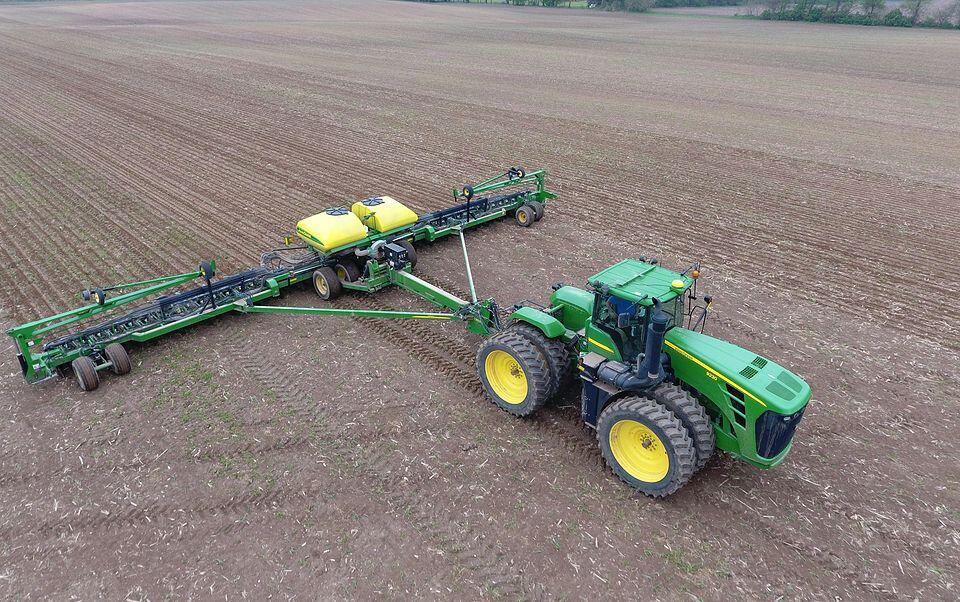
For farms, our ag lenders finance tractors, combines, planting equipment, trucks, trailers and grain handling, new and used, including private treaty and auction purchases. See farm and ag lending for the whole operation, from the operating line to the land. Our lenders work from 21 locations across Minnesota and make decisions here.
If you are buying before December 31
The last weeks of the year go fast, and they have holidays in them. If a year end purchase is on your list, start three conversations now: your accountant on the tax side, your dealer on delivery, and your lender on financing. A loan request needs current financial statements and a quote for the equipment, and every loan is subject to credit approval, so give it time. Our commercial loan application checklist lists what to gather.
Planning a purchase before year end? Talk with a business or ag lender near you about financing, timing and what your request needs. Talk with a lender
Questions about Section 179 in Minnesota
Does Minnesota allow Section 179?
Yes. For property placed in service after December 31, 2019, the Minnesota Department of Revenue says no state addition is required for federal Section 179 expensing on property that qualifies under both federal and state rules. Before 2020, Minnesota set a much lower limit and required part of the deduction to be added back, and some older advice online still describes that rule.
What is the Section 179 limit for 2026?
For tax years beginning in 2026, IRS Publication 946 sets the maximum Section 179 deduction at $2,560,000. The limit is reduced dollar for dollar once the cost of Section 179 property placed in service during the year passes $4,090,000.
Does Minnesota follow federal bonus depreciation?
Not fully. Under Minnesota Statutes section 290.0131, subdivision 9, 80 percent of the federal bonus depreciation deduction is added back to income on the Minnesota return. Ask your accountant how that affects your state return this year and in later years.
Does the equipment have to be delivered by December 31?
The deduction depends on when the equipment is placed in service. IRS Publication 946 defines that as ready and available for its specific use. An order or a payment alone does not meet that test, so ask your accountant how it applies to your purchase.
Is this post tax advice?
No. It explains how the published rules work. Security Bank & Trust Co. does not provide tax advice. Review any purchase with your accountant or tax preparer before you rely on a deduction.
Start with your accountant, then call us
Bring the questions above to your accountant, and bring the purchase to us. We would rather help you buy the right equipment at the right time than the most equipment by December 31.
Talk with a lender See all business financing
- Keep reading
- Business equipment financing for vehicles, machinery, technology and commercial kitchens.
- Equipment financing and expansion for how equipment loans fit a growing business.
- Farm and ag lending for operating lines, farmland, machinery and livestock.
- Commercial loan application checklist for the documents a request needs.
- Business loans in Minnesota for every kind of business financing we offer.
Want the next post in your inbox? Subscribe to The Helm.
Growing, together.
This post is general information about tax rules as published by the IRS and the Minnesota Department of Revenue as of November 2026. It is not tax, legal or accounting advice, and Security Bank & Trust Co. does not provide tax advice. Tax rules change and depend on your situation; review any purchase with your accountant or tax preparer before you rely on a deduction. Loan terms, structures and requirements vary by loan, and each loan agreement governs. All loans are subject to credit approval. Page last reviewed November 2026.
Topics: