

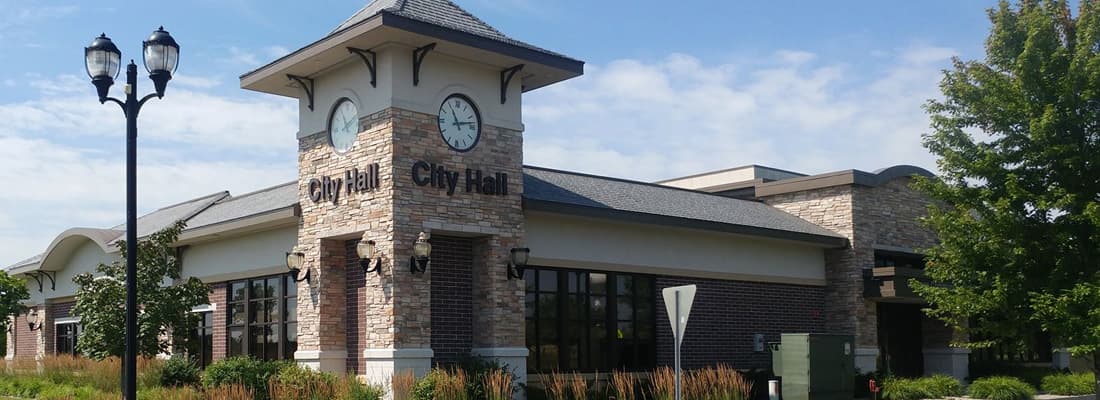

Municipal Banking in Minnesota
Banking for Minnesota cities, counties, townships, school districts and public entities. Collateral we monitor, treasury built for a public office, and financing for the projects your community already voted for.
Banking for Minnesota cities, counties, townships, school districts and public entities. Public funds deposits with collateral we monitor for you, treasury services built for how a public office actually runs, and financing for the projects your community has already voted for.
Who we bank
Cities, counties, towns and townships, school districts, hospital districts, watershed and sanitary districts, housing and redevelopment authorities, economic development authorities and public utility commissions. The entity type changes the paperwork and the approvals, not the standard of service.
Some of these relationships have run for generations. Others started with a clerk who called because a rate had not moved in three years. Both are welcome.
Your collateral is somebody's job here
You already know what Chapter 118A requires. The question worth asking a bank is not what the statute says. It is who is watching it on the days you are busy.
Public funds above federal deposit insurance have to be secured, the pledge has to move when your balance moves, and the documentation has to exist when your auditor asks. Balances jump after a tax settlement and again when bond proceeds land, then run down over months as a project draws. Coverage that was right in March is not automatically right in June.
That reconciliation is our work, not your clerk's. We monitor coverage against the balance and adjust the pledge as it moves, rather than waiting for a review date. Minnesota requires a depository to pledge collateral worth at least 110% of the balance, and on accounts we know will swing we deliberately carry more than the required amount, so a settlement or a bond closing does not create a gap while paperwork catches up.
The collateral is assigned to your entity in writing, held at a custodian your entity approves, and cannot come back to us without your authorization. Ask us for the coverage position any time and you will get it.
If your board wants federal insurance across the whole balance instead of a pledge, we can place the deposit through an insured cash sweep program so every dollar is federally insured while you keep one account and one banker here. Ask early rather than late.
A bank account compared with a statewide pool
Most Minnesota entities use both, and that is usually right. They do different jobs.
| Public funds account at a Minnesota bank | Statewide pooled investment fund | |
|---|---|---|
| What you hold | A deposit at a named, designated depository. | Shares in a pooled fund alongside other participants. |
| How it is protected | Federal deposit insurance, plus collateral pledged to your entity and held by a third-party custodian. | By the fund's structure and portfolio. Not a deposit and not federally insured. |
| Collateral coverage | 110% of your balance, the level Minnesota requires of a depository, and frequently more than that on accounts we know will move. | No collateral is pledged to your entity, because a fund share is not a deposit. |
| Can withdrawals be stopped | No. A deposit is payable on demand. | Fund documents commonly reserve the right to suspend withdrawals or postpone payment in stressed or emergency conditions. Check yours. |
| Moving money | You call. We move it. No cut-off decides whether your own banker can help you today. | Governed by published cut-off times. Miss one and it settles the next business day. |
| Getting money out | No minimum investment period and no early withdrawal penalty. | Depends on the class. Higher-yielding classes commonly carry a minimum period and a penalty. |
| What comes off the top | No fund-level expense ratio. | An expense ratio deducted from yield, and in some classes wire and check costs absorbed into a lower net rate. |
| How the rate is set | Quoted to your entity, on request. | A published yield that applies to every participant equally. |
The last row is the one to pause on. A pool publishes one yield because everyone gets the same one. A bank quotes to your entity, so the only way to know is to ask.
The part a pooled fund cannot do
Minnesota Statutes section 118A.04 lets a public entity invest in general obligations rated A or better and revenue obligations rated AA or better. A statewide investment pool operates under that same statute, so what it can own is bounded by what carries a qualifying rating.
A small city or township issuing a few hundred thousand dollars of notes often has no reason to buy a rating, because the process can cost more than the project justifies. We buy that paper anyway, by private placement, because we do the credit work ourselves. The median issue on our books is under a million dollars and the smallest is two hundred thousand.
So money placed in a pool cannot come back to a community like yours. That is not a criticism of the pools. It is arithmetic about what they are permitted to own. A community bank is not bound the same way, which is why a small note from a small town gets financed at all.
Send us your average balance. We will tell you what it would earn in our Public Funds Money Market Account, in writing, with the collateral schedule your entity would receive.
Request a Rate ReviewWhat a Rate Review is
Not a sales call. A one page document written for your council or board, which you can attach to a packet.
- What your average balance would earn in our Public Funds Money Market Account.
- The difference against what you earn now, in dollars per year rather than basis points.
- The collateral schedule your entity would receive, including where it would be held.
- The account, its liquidity and its fees in plain language.
- The depository designation language your clerk would need.
On a two million dollar balance, twenty five basis points is five thousand dollars a year. That is a squad car camera system, or a seasonal public works position, found without a levy or a hearing, and it recurs. If you are already doing better where you are, we will tell you that, and you will have a document saying so.
Where the money goes when it stays local
Public deposits do not sit still. They fund loans and the municipal debt of other Minnesota communities. Here is ours, on a map.
Grey dots are all 821 Minnesota cities, which is what gives the state its shape.
Water systems, lift stations, street reconstruction, fire trucks, school buildings, tax increment districts and a rural hospital. Ordinary infrastructure in ordinary Minnesota towns.
This is a snapshot, not a history. It counts what is on our books right now. Issues that have been paid off are not on it, and this bank was buying Minnesota municipal debt long before the oldest bond still outstanding.
It is also growing. We added a dedicated municipal banker to the team, and 11 of these issues were purchased in the first half of 2026 alone.
Communities come back
Breadth is the map. Depth is this. Nine of these communities have brought us more than one issue, and repeat business is 32% of what we hold today. The real figure across the bank's history is higher, because paid-off issues are not on this list.
Glencoe has come back eight times across thirteen years and three different rate environments. Winsted has come back five times. A city does not go back to a bank that made the last one hard, and it does not go back to one that was not competitive on rate either. Repeat business is the only testimonial that has to be earned twice.
Ask for Adam

Adam Birkholz
VP Commercial Loan Officer
Adam is your first call on public funds. Before he came to the bank, he was City Administrator for the City of Winsted.
He has sat on your side of the table. He has written the depository resolution, taken the item to a council, worked with a municipal advisor on a bond sale, and answered to an auditor. That is an unusual background for a banker, and it is why public entities ask for him by name.
Call (320) 485-3831 Email abirkholz@security-banks.com Winsted office 110 First Street North, Winsted, MN 55395
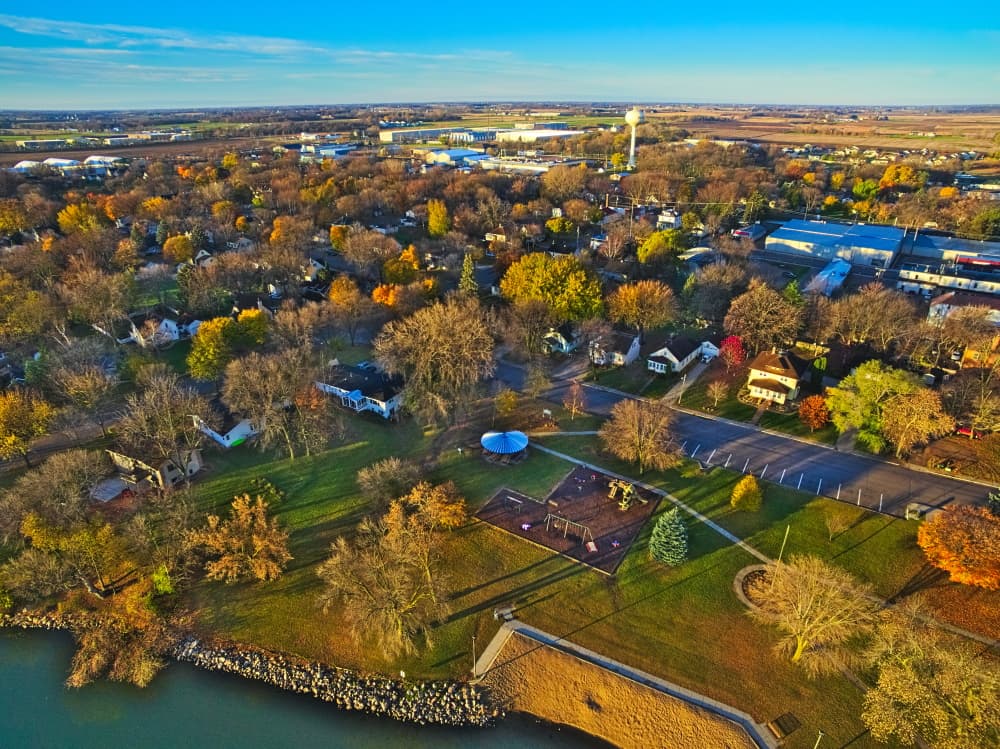
Winsted, Minnesota. The stabilized shoreline, the park, the street grid and the water tower on the horizon are the kinds of projects municipal financing pays for. Winsted has brought us five separate issues.
“Security Bank & Trust Co. has been a great partner for the City of Winsted. The bank has highly competitive investment rates. Adam Birkholz has been an invaluable resource as well. His history working in the public sector has given him valuable insight on how to structure municipal bonds. The city is proud to have Security Bank & Trust Co. as a partner.”
Neil Schlagel, City Administrator, City of WinstedTreasury and cash management for public entities
Public offices have a specific problem. Many hands touch the money, the calendar is fixed by statute, and the audit is public. Control comes first, convenience second.
Positive Pay with Payee Match
- Check Positive Pay matched on payee name, not just amount
- ACH Positive Pay with debit filters and blocks
- Daily exception review before items post
Vendor lists and check images tied to public entities are often obtainable, which makes an altered payee the most common loss. This is the control that catches it, and the one most public offices are not yet using.
ACH and wire
- ACH origination for payroll and vendor payments
- ACH collection for utility billing and recurring fees
- Online wire transfer with dual approval
- Merchant card services for counter and online payments
Moving utility billing off paper checks is usually the fastest measurable win for a clerk's workload.
Multi-user online banking
- Managed access rights by user and by account
- Separation of initiation from approval
- Account structures that map to your funds
- Reporting your auditor can use directly
Segregation of duties is an audit finding waiting to happen when one person can both initiate and release. Permissions are set so that cannot occur.
Public Funds Money Market Account
- Built for balances between the day they arrive and the day they are spent
- No minimum investment period, no early withdrawal penalty
- No fund-level expense ratio
- Collateral documentation maintained as the balance moves
Tax settlements arrive twice a year and bond proceeds arrive at once. This is the account that holds the balance in between, and the one to ask us to quote.
The guide to treasury management covers each service in more depth, including how to decide which controls your entity actually needs.
Municipal lending and project financing
We buy general obligation bonds, revenue obligations, notes and lease purchase obligations directly from Minnesota issuers, including on a private placement basis. For a small or mid-sized issue that is often faster and cheaper than a public offering, because there is no ratings process, no official statement and no syndicate to assemble. You work with your municipal advisor and bond counsel as you always would. We are the buyer at the end of it rather than a distributor reselling the paper, so it stays on our balance sheet, in Minnesota.
We also lend directly for construction and capital projects, bridge and interim financing including USDA Rural Development approved projects, tax and aid anticipation borrowing, equipment lease purchase, and refunding where the arithmetic supports it.
If a public offering serves your project better than we do, we will say so. It happens, and saying it is why entities keep calling.
How a new depository relationship starts
- A conversation. What you hold, what it earns, where the friction is. No commitment.
- A written proposal. Account structure, services, fees and a current rate quote, in a form your board can read.
- Your board designates the depository. We supply what your clerk needs and work to your meeting date.
- Accounts open and collateral is pledged. You receive the documentation before funds move.
- Funds move on your schedule. Many entities start with one fund and expand after watching it work through a cycle.
There is a natural moment for this and it comes once a year. Most Minnesota entities designate depositories annually, often at the organizational meeting. If that item is coming onto your agenda, it is the cheapest time to add a name, because the resolution is being drafted anyway. If your designation meeting is two months out, this is the right week to ask for a rate review.
Questions Minnesota public entities ask
Who watches our collateral coverage?
We do, and it is a standing operational job here rather than something that happens when someone remembers. Coverage is monitored as your balance moves, the pledge is adjusted after a tax settlement or a bond sale rather than at the next review date, and the documentation your auditor asks for goes to you without you chasing it. Under section 118A.03 the collateral is assigned to your entity in writing, held at a custodian your entity approves, and cannot be returned to us without your authorization. Our job is to make sure the coverage is right on the days you are not thinking about it.
Can our entity get full FDIC insurance instead of collateral?
Yes. We can place the balance through an insured cash sweep program that spreads it across a network of banks in insured-size amounts, so the entire balance carries federal deposit insurance rather than depending on a pledge. You keep one account, one statement and one banker here. It is not our default structure, so raise it in the first conversation if your board wants it.
How do we find out what our funds would earn?
Ask for a Public Funds Money Market Account Rate Review. Send a recent statement or just your average balance and we send back a one page document written for your board: what the balance would earn here, the annual difference in dollars rather than basis points, the collateral schedule your entity would receive, and the depository designation language your clerk would need. It costs nothing and obligates you to nothing. Rates are subject to change and are not a commitment until set out for your entity in writing.
How should we compare a bank rate to a pooled fund yield?
Put both on the same basis, because they are quoted differently. A fund's published seven-day yield is a simple annualization of a seven-day window, multiplied by 365 over 7, with no compounding. A bank annual percentage yield already includes compounding. Comparing one to the other at face value overstates or understates the gap depending on which way you do it. Convert both to an effective annual yield, and compare figures from the same date, because a yield from two months ago is not comparable to a rate quoted today.
What else should we check on a pooled fund?
Read the fund's information statement. Check the expense ratio, since fund fees come out of the yield you are quoted. Check whether the quoted yield reflects a voluntary fee waiver, because a waiver can be withdrawn and the yield falls with nothing happening in the market. Check the cut-off times, which govern how late you can move money and whether it settles today or tomorrow. Check whether your class carries a minimum investment period or an early withdrawal penalty, because the higher-yielding class often does. And check whether the fund can suspend withdrawals or postpone payment. Pooled fund documents commonly reserve that right for stressed or emergency conditions. None of it is hidden. It is in the document rather than on the rate page.
Can our money ever be locked up?
Not here. A bank deposit is payable on demand, and Minnesota law is explicit that if a depository closes, all deposits become immediately due and payable. There is no mechanism by which we can hold your money back. That is not true everywhere. Pooled investment fund documents commonly reserve the right to suspend withdrawals or postpone the date of payment under stressed or emergency conditions, and some reserve the right to limit the size of an account or the frequency of transactions. Those provisions exist for sound reasons and they are rarely used. They are also the kind of thing worth knowing before the week you need the money rather than during it.
How is our rate set?
Deposit rates for public entities are quoted to a specific entity rather than published, because balance, structure and how the funds behave through the year all bear on them. That does not mean the rate is arbitrary. We follow the same short-term rate markets the pooled funds do, we watch where the pool options are, and we set the account to be competitive with them. The rate moves when the market moves. Ask for a Rate Review and we will show you where you would stand today, in writing. Rates are subject to change and are not a commitment until set out for your entity in writing.
How quickly can we move funds in and out?
You call your banker and we move it. There is no daily cut-off deciding whether your own bank can help you today, and no minimum investment period or early withdrawal penalty on the Public Funds Money Market Account. That is the difference public officials notice most and expect least. It matters least when a transfer is planned and most when a payroll file is wrong, a closing moves up, or a contractor has to be paid before a holiday weekend.
Do you work with school districts and townships, or only cities and counties?
All of them. Section 118A.01 defines a government entity as a county, city, town, school district, hospital district, public authority, public corporation, public commission, special district or any other political subdivision, and for the depository and collateral sections it also includes an American Indian tribal government entity within a federally recognized reservation. Our own municipal holdings span cities, towns and townships, a county, a school district, a watershed district, a joint sewage treatment commission, a lake improvement district and a housing and redevelopment authority.
Are we too small?
Half of the issues on our books are under one million dollars and the smallest is two hundred thousand. We buy small issues by private placement without requiring a rating, because we do the credit work ourselves. If your project is a well, a lift station, a fire truck or three blocks of street, you are not an exception here. You are the median.
What does our council need to approve to add us as a depository?
A resolution designating the institution as a depository, adopted by the governing body and recorded in the minutes. Most Minnesota entities handle designations annually, often at the organizational meeting. We supply what your clerk needs and work to your meeting calendar. Designating a depository does not obligate the entity to move any funds. It is permission to have the option.
Do we have to move our whole relationship at once?
No, and most entities do not. A common starting point is one account or one fund held through a full cycle, so your staff can watch how statements, collateral reporting and service actually work before anything else moves. Entities that expand do it because the first piece went well, which is the only good reason to.
Do you buy municipal bonds directly from Minnesota issuers?
Yes. We purchase general obligation bonds, revenue obligations, notes and lease purchase obligations directly from Minnesota issuers, including through private placement. For smaller issues that is often faster and less costly than a public offering, because it avoids the ratings process, the official statement and the syndicate. You continue to work with your municipal advisor and bond counsel. We hold what we buy rather than reselling it.
Can you finance a project before our bond issue closes?
Often, yes. Bridge and interim financing is a regular part of our municipal lending, including for USDA Rural Development approved projects where permanent funding is committed but not yet funded. Tax and aid anticipation borrowing is available to smooth cash flow between settlements. All financing is subject to credit approval and to the borrowing authority your entity holds under Minnesota law.
Keep reading
- Guide to treasury management, every cash management and fraud control service in detail
- Community involvement, where the bank shows up outside the loan file
- Business financing at Security Bank, the full range of commercial and project lending
- Nonprofit banking, for the organizations your entity partners with
- Why Security Bank, how decisions get made here
Start with one number
Send us your average balance. We will send back what it would earn, what that is worth to your budget in a year, and the collateral schedule your entity would receive. One page, written so you can hand it to your board.
Growing, together.
Deposit rates and terms are quoted to a specific entity, are subject to change, and are not a commitment until set out in writing for that entity. Descriptions of Minnesota Statutes Chapter 118A are general and are not legal advice; your entity should confirm any requirement with its own counsel and auditor. Municipal obligation figures describe issues currently outstanding on our books, stated at original face amount rather than current balance, and change as bonds are purchased, amortize and mature. All financing is subject to credit approval. Page last reviewed July 2026.