


Business Equipment Financing in Minnesota
Vehicles, machinery, technology and commercial kitchens. We finance new and used equipment, and refinance what you already own.
Business equipment financing in Minnesota, for the truck, the machine, or the line that your revenue actually runs on. Talk with a lender who works in your market and decides here.
What is business equipment financing?
Equipment financing is a loan that lets your business buy the machines, vehicles, and tools it needs without draining the cash it needs to operate. The equipment itself serves as the collateral, which is what separates it from a general working capital loan. You are borrowing against a specific asset that produces specific revenue.
That structure matters more than most owners expect. Because the loan is tied to an asset with a known value and a known useful life, the term can be matched to how long that asset earns. A skid steer that works for a decade should not be financed the way you would finance a season of inventory, and a fleet of laptops should not be financed like a building.
Businesses across the Twin Cities metro, McLeod County, Carver County, and greater Minnesota use equipment loans for the same three reasons: buying something new, replacing something worn out before it fails, and pulling cash back out of equipment they already own free and clear.
What equipment qualifies?
If it is a durable asset your business uses to produce revenue, it is usually financeable. These are the categories we see most often across Minnesota.
Vehicles and fleet
- Commercial trucks, vans, and trailers
- Service and specialty vehicles
- Multi-unit fleet purchases on one loan
Heavy machinery
- Construction machinery and attachments
- Farm and agricultural equipment
- Manufacturing and fabrication machines
Industrial and production
- Conveyor systems and stationary machinery
- Packaging, printing, and processing lines
- Shop equipment and material handling
Practice, office, and kitchen
- Medical, dental, and veterinary equipment
- Restaurant ranges, refrigeration, and kitchen build-outs
- Computers, printers, and technology infrastructure
One loan can cover a single purchase or several pieces at once. If you are replacing three trucks and a trailer in the same quarter, that does not have to become four separate conversations.
New equipment, used equipment, and refinancing what you own
We finance all three, and the distinction changes the structure more than it changes the answer.
New equipment
New equipment carries a clear invoice, a manufacturer warranty, and a predictable depreciation curve. Security Bank & Trust Co. will consider financing up to 80% of the acquisition cost of new equipment, and up to 100% with additional collateral for qualifying businesses and equipment. Soft costs such as freight, installation, and setup can generally be included in the purchase price we review.
Used equipment
Used equipment is financeable and it is a large share of what actually moves in Minnesota, particularly in construction, trucking, and agriculture. Two things drive the structure: the age of the asset and how well its resale market holds up. A five-year-old excavator with documented hours and service records supports a longer term than a specialized machine with a thin secondary market. Expect a shorter amortization than you would get on the same item new, because the remaining useful life is shorter.
Refinancing equipment you already own
If you paid cash for a machine, that capital is now sitting in steel. An equipment refinance uses that owned equipment as collateral to put working capital back on your balance sheet. Owners commonly do this after a strong season, when the cash outlay made sense at the time but the business now needs liquidity for payroll, materials, or the next purchase.
How equipment loans in Minnesota are typically structured
Most business equipment financing is a term loan. You borrow a set amount and repay it with principal and interest over a defined period, with a fixed or variable interest structure. There is a second option worth knowing about, because it fits businesses that buy equipment repeatedly rather than once.
| Equipment term loan | Line of credit secured by equipment | |
|---|---|---|
| Best when | You are buying one asset, or a defined group of assets, at a known price. | You buy equipment on an ongoing basis and want capacity in place before you need it. |
| How it works | Closed ended. Funds disburse at purchase and the balance amortizes down. | Revolving. Draw against the line as purchases come up, within an agreed limit. |
| Payments | Principal and interest, on a set schedule. | Generally interest only during the draw period. |
| Typical term | Up to 84 months, or seven years, matched to the useful life of the asset. | Generally interest only for a period of 12 months, then reviewed and renewed. |
| Interest structure | Fixed or variable. | Floating. |
| Collateral | The equipment being purchased. | The new purchase, significant existing equipment, or both. |
The governing principle in both cases is the same one: match the term to the life of the asset. Financing a seven-year machine over three years strains cash flow that did not need to be strained. Financing a three-year asset over seven means you are still paying for it after it stops earning.
How equipment is valued as collateral
Because the asset secures the loan, its value drives how much can be advanced against it. A few things carry most of the weight.
- Purchase price and invoice. On new equipment, the dealer invoice including soft costs is the starting point.
- Age and hours. On used equipment, documented hours or mileage and a maintenance history do real work in the file.
- Resale market depth. A machine with an active, liquid secondary market supports a stronger advance than a purpose-built asset only a handful of buyers would want.
- Mobility and titling. Titled vehicles and rolling stock are valued and perfected differently than machinery bolted to a floor.
- Specialization. Highly customized equipment can be worth a great deal to your operation and much less to anyone else, and the advance rate reflects that.
None of this is meant to be a hurdle. It is how we get to a structure that holds up if the year goes sideways, which is the point of underwriting it carefully in the first place.
Seasonal and agricultural equipment
A lot of Minnesota revenue arrives in bursts. Row crop operations get paid at harvest. Excavating contractors and landscapers do the bulk of a year's work between April and November. Snow removal runs the opposite calendar.
Equipment financing should reflect that. A payment schedule built for a business with even monthly receipts is the wrong shape for an operation that earns most of its money in four months, and a lender who does not work in these markets often does not know to ask. Talk with your lender about how your receipts actually arrive. On agricultural equipment specifically, seasonality, commodity cycles, and the way used farm machinery holds value are all part of the conversation, and they are conversations our lenders have been having in these counties for decades.
Not sure whether a term loan or an equipment line fits how your business buys? That is exactly the conversation our business lenders like having.
Start the ConversationHow a local decision differs from a national lender
Online and national equipment lenders compete on speed, and they get there by asking for very little. A short application and a credit pull can produce an answer quickly. What they generally cannot do is understand your business, which means the structure they offer is the structure their model produces rather than the one your operation needs.
We ask for more because we are building something specific to you. Your lender can come see the equipment, walk your shop or your field, and understand why this purchase matters now. The credit decision is made by people in Minnesota who know the market the asset works in and who will still be your contact after closing. That is what makes flexible structure possible: a seasonal payment schedule, a line rather than a loan, a longer term on a well maintained used machine.
When the year does not go the way you planned, the difference between a relationship and a servicing portal is not abstract. It is who picks up the phone.
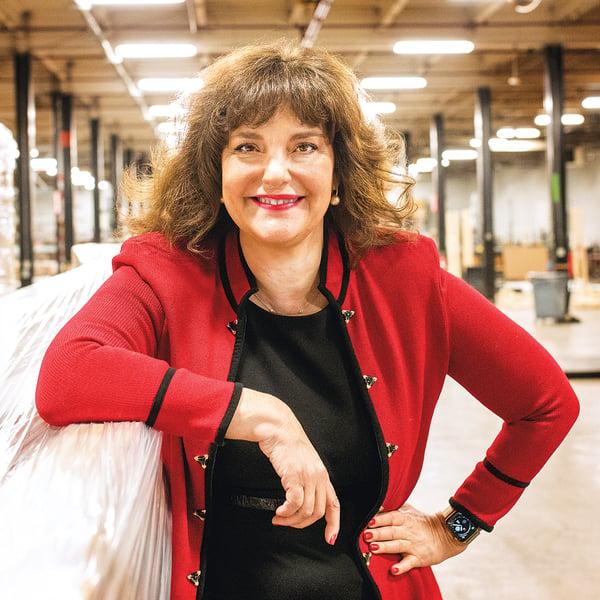
“The close relationship with the bankers allow me to pick up the phone and quickly get my questions answered.”
Rosy Brown, CEO, RASCO Industries, Inc.A worked example
Numbers help. This is illustrative only, meant to show how the pieces fit together rather than to describe an offer.
A Minneapolis contractor buying a compact track loader. The dealer invoice is $110,000, plus $6,000 in attachments, freight, and setup. Total acquisition cost is $116,000. The machine is new, and the business has been operating for nine years with consistent revenue.
- Total acquisition cost$116,000
- Financed at 80% of cost$92,800
- Cash required at closing$23,200
The machine has a useful life well beyond seven years, so the term is set at 84 months to keep the payment aligned with what the loader earns. Had this contractor pledged additional collateral, up to 100% of cost could have been considered, reducing the cash needed at closing. Had the machine been three years old instead of new, the term would likely have been shorter to match its remaining life.
Every one of those variables is a conversation, not a formula. Your actual structure depends on the equipment, your business, and credit approval.
What your lender will review
Nothing here is a surprise, and having it ready shortens the process considerably.
- The purchase price of the equipment, including soft costs such as freight and installation
- How long you have been in business
- What the equipment will be used for
- Your preferred repayment terms
- Annual business revenues, supported by business and personal tax returns and financial statements
- Your personal credit score
We review all of it so we can build a structure that fits, and we work to do it in short order. A lender who asks for less is not doing you a favor. They are making up the difference somewhere in the terms.
Common questions about equipment financing in Minnesota
What is business equipment financing?
Business equipment financing is a loan used to purchase machines, vehicles, or tools, with the equipment itself serving as collateral. It lets a business leverage its cash rather than spend it, and it can also be used to refinance equipment the business already owns.
What types of equipment can I finance?
Commercial vehicles and fleet, construction and farm machinery, manufacturing and industrial equipment, medical, dental and veterinary equipment, restaurant and commercial kitchen equipment, and office technology. One loan can cover a single item or several pieces at once.
Can I finance used equipment?
Yes. Used equipment is a large share of what moves in Minnesota. The age of the asset and the depth of its resale market shape the structure, and the amortization is generally shorter than it would be on the same item new, because the remaining useful life is shorter.
How much do I need to put down on an equipment loan?
Security Bank & Trust Co. will consider financing up to 80% of the acquisition cost of new equipment, and up to 100% with additional collateral for qualifying businesses and equipment. On an $116,000 purchase financed at 80%, that means roughly $23,200 in cash at closing.
What are typical terms on a business equipment loan?
Business equipment loans are generally term loans, repaid with principal and interest on a fixed or variable structure for a period up to 84 months, or seven years. The term is matched to the useful life of the asset being financed.
What determines the interest rate on a business equipment loan?
Rates are set per borrower rather than published as a single number, because the structure drives the pricing. The largest inputs are the age and resale depth of the equipment, the term relative to the useful life of the asset, how long the business has been operating, the strength of the financial statements, and whether the loan is fixed or variable. A new machine on a shorter term with strong coverage prices differently than a ten-year-old specialized asset. Your lender can price the actual structure once the equipment and the term are known. All loans are subject to credit approval.
Do I need to have been in business a certain number of years?
There is no single cutoff. How long you have been in business is one of several things your lender reviews, alongside what the equipment will be used for, your annual revenues, and your financial statements. Newer businesses are financeable, and the structure reflects the shorter track record.
Can I refinance equipment my business already owns?
Yes. If you paid cash for a machine, an equipment refinance uses that owned equipment as collateral to put working capital back on your balance sheet. Owners often do this after a strong season, when the business needs liquidity for payroll, materials, or the next purchase.
Is an equipment loan or a line of credit better for equipment?
A term loan fits a defined purchase at a known price. A line of credit secured by equipment fits a business that buys on an ongoing basis and wants capacity in place ahead of time. Lines are generally interest only for a period of 12 months with a floating structure.
Can I set up seasonal payments on equipment financing?
Talk with your lender about how your receipts actually arrive. Agricultural, excavating, landscaping, and snow removal operations earn most of their revenue in part of the year, and a payment schedule can reflect that. This is one of the things a local decision makes possible.
Does my personal credit score matter for a business equipment loan?
Yes, it is one of the items reviewed, alongside your business and personal tax returns and financial statements. It is one input among several rather than the whole decision, which is the practical difference between a relationship lender and an automated one.
Keep reading
Let's talk about the equipment
Bring us the quote, the machine, or just the problem you are trying to solve. Our business lenders will walk through what fits and what it would look like. That is another way we are
Growing, together.
All loans are subject to credit approval. Terms, conditions, advance rates, and eligibility requirements apply and vary by borrower and by equipment. The example shown is illustrative only and is not an offer of credit or a quote. Talk with your lender about the structure that fits your situation. Page last reviewed July 2026.