


Farm & Agricultural Lending in Minnesota
Operating lines, farmland, equipment, livestock, and FSA guaranteed loans, from lenders who come out to the farm.
Operating lines, farmland, equipment, livestock, and government guaranteed farm loans across Minnesota. Talk with a lender who has walked operations like yours and who makes the decision here.
Why Minnesota farms bank with Security
Agriculture carries more working capital, more technology, and more scale than it did a generation ago. The input bill arrives months before the check does, land trades at values that would have been unthinkable to your grandfather, and one equipment decision can move a whole year. What has not changed is that the operation still runs on relationships and on timing.
Security Bank & Trust Co. has been lending in Minnesota since 1935, and farmers were among the first customers this bank served. Our lenders work in McLeod, Carver, Sibley, Meeker, and Isanti counties and the country around them, and they have financed operations through good years and bad ones. That matters most in the year that goes sideways, because the person deciding what happens next is someone you have already met.
We finance the whole operation rather than one piece of it: the operating line that carries you to harvest, the farmland, the machinery, the livestock and the barns, and the government guaranteed programs that make a deal work when the numbers are tight. It is a relationship where we truly are Growing, together.
What we finance
Four kinds of credit cover most of what a Minnesota operation needs. Most farms carry more than one at a time, and structuring them together is a large part of what an ag lender is actually for.
Farmland and agricultural real estate
- Tillable acres, pasture, and timber
- Adding to the home place or buying out a neighbor
- Building sites, grain storage, and shop facilities
- Refinancing land already owned
Operating loans and ag lines of credit
- Seed, fertilizer, chemical, and fuel
- Feeder livestock and feed purchases
- Custom work, labor, and family living
- Carrying costs between planting and the elevator
Farm equipment and machinery
- Tractors, combines, and planting equipment
- Trucks, trailers, and grain handling
- New and used, including private treaty and auction
- Refinancing machinery you already own outright
Livestock and facilities
- Dairy, swine, and cattle operations
- Breeding stock and herd expansion
- Barns, confinement buildings, and manure systems
- Feedlot and finishing operations
Farmland and agricultural real estate loans
Farmland is treated as income producing land, meaning acreage committed to ongoing agricultural production or management where the cash flow from the ground is the primary source of repayment. That definition drives the structure, and it is why farm real estate is not underwritten like a house or like a raw land purchase.
Whether your plans are row crop production, pasture, or the construction of facilities, we work with farmers and with farmland investors to build a structure around what the ground actually produces. Terms and amortization are set to the operation, and your lender will walk through what the structure looks like before you are asked to commit to anything.
Why we look at dollars per acre, not just percentages
Here is something worth knowing about how we underwrite farm ground, because it is a real difference and most borrowers never hear it said out loud.
Alongside the usual measures, we hold a view on the maximum we will lend per acre, and that ceiling varies by area. Good ground in one township supports a different number than ground twenty miles away, and we set those figures deliberately rather than simply following the market up.
The reason is the 1980s. Land values ran, credit followed them, and when values corrected the debt did not. Farms that had done nothing wrong lost ground because the lending had been sized against a peak that turned out to be temporary. That is a lesson this bank learned in this state, and it is built into how we lend now.
In a hot market that discipline can mean we are not the highest number at the table, and we will tell you that plainly rather than stretching and calling it service. What it buys you is a loan that still works when prices come back to earth, which is the only kind worth signing. A lender who advances everything the market will bear in a strong year is not being generous with you. They are being generous with your equity.
Land in this part of Minnesota rarely comes up twice. When the neighbor's quarter finally sells, the operation that already has a lender who knows its balance sheet is the one that can move. That is a conversation worth having a year early, especially when you're considering financing a farmland purchase, not the week the auction is announced.
Farm operating loans and ag lines of credit
The operating line is the piece of the farm balance sheet that does the most work and gets the least attention. It funds the crop or the herd from the day you commit to it until the day it sells, and how it is sized and timed decides whether the year feels manageable or tight.
Agricultural lines of credit and single pay notes at Security Bank generally mature in 12 to 24 months, set against the timing your operation actually runs on rather than a calendar year. A row crop line and a feeder cattle line are two different animals, and they should not carry the same maturity.
The 24 month note matters more than it sounds like it should. A twelve month maturity forces a renewal conversation every single year whether or not anything about the operation has changed, and it lands in whatever month the note happened to be written rather than the month that suits your year. Going out to twenty four months takes that off the table and lets the note span a full cycle plus the margin to market a crop rather than sell it into the harvest low. Talk with your lender about which one fits. For what happens to each document after it reaches your lender, read our post on farm operating line renewal and what to bring this fall.
One practical difference worth knowing: unlike a commercial line of credit, our agricultural lines are not subject to borrowing base certificate reporting. That is a monthly paperwork obligation your operation does not have to carry, and it exists because farm inventory does not behave the way a distributor's warehouse does.
Crop insurance, either hail or multi-peril, is strongly suggested on crop production loans. It protects the crop that repays the note, and it protects the operation behind it.
What secures an operating line
Operating credit is generally secured by the crop or the livestock it funds, supported by a blanket security agreement across machinery, livestock, motor vehicles, and farm products. A few things shape how much credit that collateral supports.
| Collateral | What your lender is looking at |
|---|---|
| Crops in inventory | Bushels in the bin and where they are priced against the market. |
| Crops in the ground | Insured value is the reference point, which is one of the reasons the coverage you elect matters. |
| Livestock and breeding stock | Head count and condition, inventoried and updated at the farm visit. |
| Machinery and equipment | What is owned free and clear, and how well the resale market for it holds up. |
Credit secured only by crops or livestock is generally structured with additional collateral in the form of equipment or real estate, or supported by a blanket security agreement. This is normal ag lending practice and it is the reason a whole operation conversation produces a better structure than a single loan conversation.
Farm equipment loans
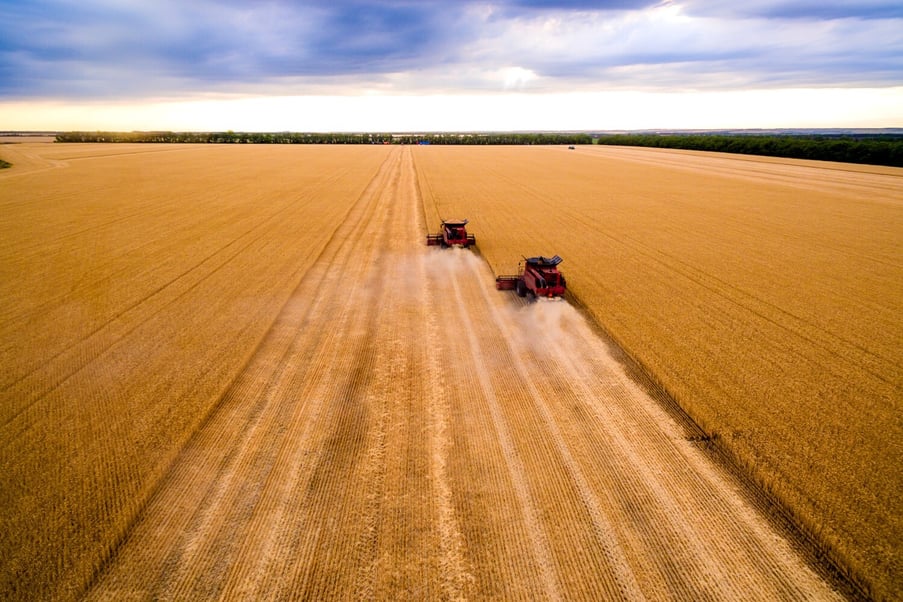
Your operation needs combines, tractors, trucks, and grain handling to run efficiently, and the machinery line is often where a good year turns into a better one. Equipment financing lets you buy the iron you need, or refinance machinery you already own, using the equipment itself as collateral.
The governing principle is to match the term to the working life of the machine. A tractor that will run for fifteen years should not be financed the way you would finance a season of inputs, and a piece with a thin resale market carries a different structure than one that trades every week. Used equipment is a large share of what actually moves in Minnesota agriculture, and it is financeable; documented hours and service records do real work in the file.
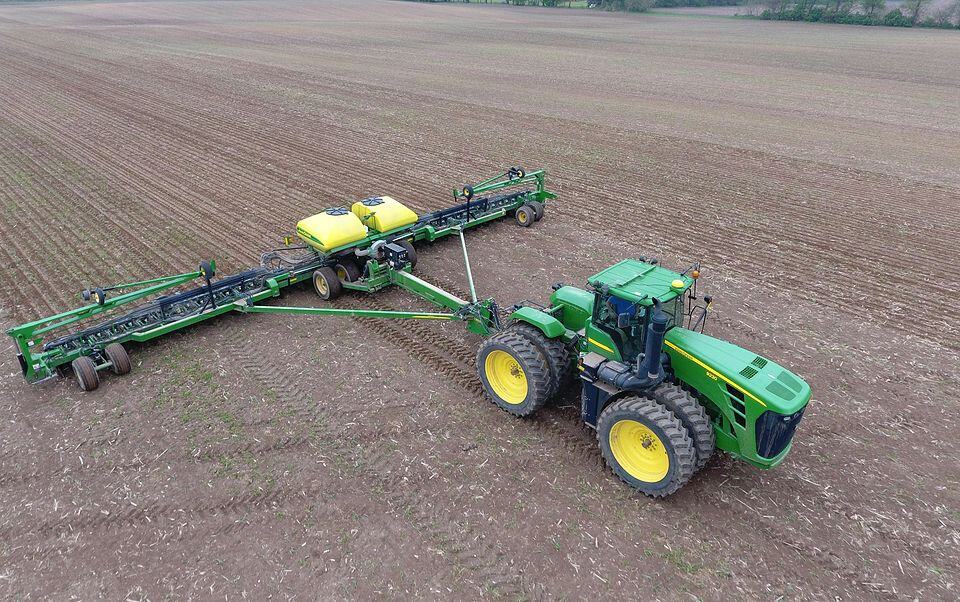
Auction and private treaty purchases move fast, which is exactly why a lender who already knows your operation is worth having before the sale bill comes out. If you also run non-farm business equipment, our business equipment financing page covers that side.
Sale bill out on a piece you want? Bring it to us before the auction, not after. Knowing your number in advance is most of the advantage.
Talk With an Ag LenderRefinancing farmland and farm debt
Refinancing is not a sign that something went wrong. Most often it is a structure that fit five years ago and does not fit now, because the operation grew, the acres changed, or debt got taken on one piece at a time until the payment schedule stopped matching the year.
The common cases are straightforward. Land financed on a short amortization that is straining cash flow gets re-termed against what the ground actually produces. Machinery notes scattered across three lenders and four maturities get consolidated into one payment on one schedule. Equipment owned free and clear gets refinanced to put working capital back on the balance sheet after a heavy cash year. Debt carried on the operating line that should never have been there gets moved to term, which is often the single most useful thing a farm can do for its own liquidity.
Guaranteed farm ownership loans through the Farm Service Agency can be used to refinance debt as well, which sometimes makes a restructure work that would not work conventionally. Bring the whole debt schedule, not just the piece that is bothering you. The right answer usually only shows up when a lender can see all of it at once.
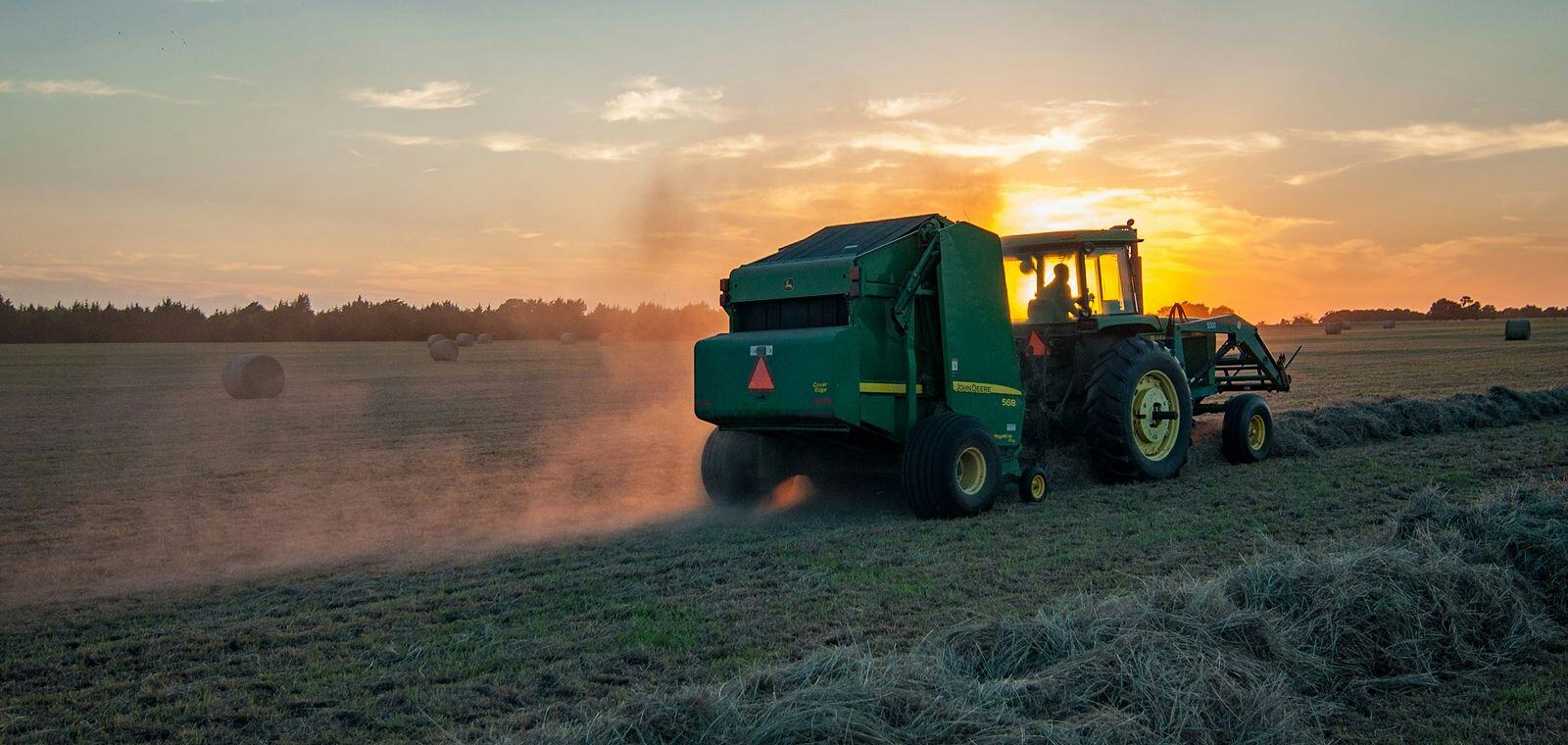
We finance breeding stock and herd expansion, feeder and finishing purchases, and the buildings and systems that hold an operation together: barns, confinement facilities, manure handling, and feed storage. We have experience across dairies, cattle, commercial feedlots, poultry, and swine operations.
Livestock and breeding stock are inventoried and updated when your lender comes out. On a larger confinement facility, expect a more thorough review than on a smaller expansion, which is a function of the size of the commitment rather than any doubt about the operator.
Not every farm looks the same
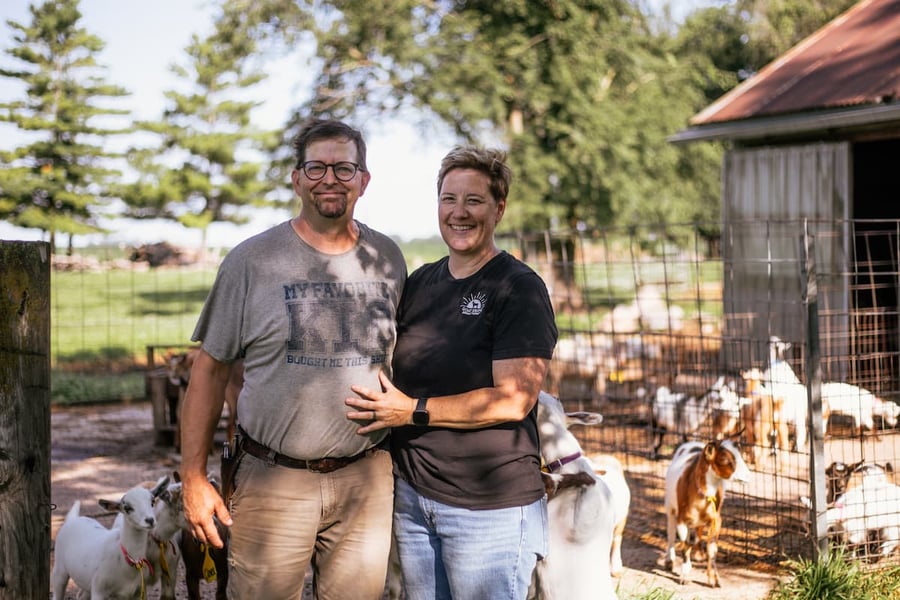
Tracy and Ed run Goat Shine, a Security Bank customer with more than ninety Nigerian dwarf goats and a business that started twenty years ago with one family's problem to solve. Their goats now visit senior living homes four and five days a week. Farmfest named them Family of the Year.
They are not a row crop operation, a dairy, or a feedlot, and that is the point. Agriculture in Minnesota includes the quarter section and it includes the operation nobody else knows how to underwrite. Bring us yours.
Government guaranteed farm loans in Minnesota
Sometimes a deal is right for the operation and still hard to fit inside conventional structure. That is what the guarantee programs are for. Security Bank works with several agencies, and the practical benefit is the same in each case: a guarantee behind part of the loan lets us extend credit that would otherwise be a stretch, at terms that work for the farm.
Farm Service Agency (FSA) guaranteed loans
At times Security Bank & Trust Co. has the opportunity to work in close cooperation with the local Farm Service Agency office to make loans more bankable for our ag customers. FSA does not lend directly in this arrangement; the bank makes the loan and FSA guarantees a portion of it.
Guaranteed farm ownership loans
Guaranteed farm ownership loans may be used to purchase farmland, construct or repair buildings and other fixtures, develop farmland to promote soil and water conservation, or refinance debt. These are the loans that put a young operator on their own ground.
Guaranteed operating loans
Guaranteed operating loans may be used to purchase livestock, farm equipment, feed, seed, fuel, farm chemicals, insurance, and other operating expenses. They can also cover minor improvements to buildings, costs associated with land and water development, family living expenses, and, under certain conditions, the refinancing of existing debt.
Beginning farmer loans
FSA makes and guarantees loans to beginning farmers who are unable to obtain financing from commercial lenders, for both farm ownership and operations. There are programs to assist socially disadvantaged and beginning farmers in purchasing a farm, and FSA works with retiring farmers who want to use the program to transfer their land to the next generation.
Minnesota Rural Finance Authority and USDA Rural Development
Two more sources sit alongside FSA and are often overlooked. The Minnesota Rural Finance Authority, part of the Minnesota Department of Agriculture, participates with banks on farm loans and runs programs aimed squarely at beginning farmers, land purchases, and agricultural improvements. USDA Rural Development supports rural business and facility projects that sit next to farming without being farming.
Our lenders are encouraged to use these programs, not treated as though reaching for them is a last resort. If a guarantee or a participation is what makes your deal work, that is a good outcome, and knowing which door to knock on is part of the job.
Beginning farmers and the next generation
Getting started in agriculture is the hardest capital problem in the industry. Land costs more than the cash flow from it will service in the early years, machinery is expensive before there is a track record to borrow against, and the operators most willing to work are the ones with the shortest balance sheet.
There is no single formula, and anyone who offers you one has not looked at your situation. What actually works is a combination: a guarantee program carrying part of the risk, a family transfer structured so both generations can live with it, a machinery line sized to the acres you actually farm rather than the acres you hope to, and a lender willing to talk through the plan a year before you need the money.
Come talk to us early. The conversation costs nothing and it is far easier to build a path when there is time to build it.
Farm succession and passing the operation on
Most of the farms we bank will change hands within a generation, and the transfer is usually harder than the farming. There is the ground, the machinery, the entity, the off-farm heirs, and the fact that the people involved have to keep eating Thanksgiving dinner together.
Financing is one piece of that. A land purchase between generations, a machinery buyout, a gradual transfer supported by a guarantee program, all of it is credit we can structure. The other piece sits in our Trust department, which administers farmland along with the rest of the assets families place in trust, and which does that work in the same buildings as the lenders. If you are thinking about how the operation passes on, our trust and wealth management team is a good next conversation.
Why the farm visit matters
An annual visit to the operation by the lending officer is standard practice on our agricultural relationships, and it is not a formality. The visit is where livestock, machinery, and grain inventories get updated, and where crop conditions get evaluated during the growing season. It is also where a lender learns the things that never make it onto a balance sheet.
That is the difference between a relationship lender and a credit model. A national lender or an online platform competes on speed, and gets there by asking for very little and understanding less. When the year does not go the way anyone planned, the structure that survives is the one built by someone who has stood in the field.
We understand your schedule. If you cannot get in to your local branch, we will come to you. Your banker stays with you year after year, which means next season's conversation starts where last season's left off rather than at the beginning.
What your ag lender will review
None of this is a surprise, and having it together shortens the process considerably.
- Personal and business tax returns, as appropriate to how the operation is structured
- A current personal financial statement, and a balance sheet for the operation
- Crop and livestock inventories, and the acres you own and rent
- Machinery list, with what is owned free and clear noted
- Crop insurance coverage and the level elected
- A cash flow projection for the year ahead, including family living
- Existing debt, terms, and who holds the liens
If your records are not in this shape, say so. Getting them there is work we can help you scope, and it is worth doing for reasons that have nothing to do with the bank. Our post on farm operating line renewal walks through what a lender does with each of these, and the three things that make the conversation easy.
Common questions about farm loans in Minnesota
What types of farm loans does Security Bank offer?
Farmland and agricultural real estate loans, operating loans and agricultural lines of credit, farm equipment and machinery financing, livestock and facility loans, refinancing and debt consolidation, and government guaranteed loans through the Farm Service Agency, the Minnesota Rural Finance Authority, and USDA Rural Development. Most operations carry more than one at a time, and structuring them together is the point.
How much can I borrow against farmland?
It depends on the ground and on the operation behind it. Farmland is treated as income producing land, meaning acreage committed to ongoing agricultural production where the cash flow from the ground is the primary source of repayment, and the structure is built around what it produces. Alongside the usual measures we also hold a view on the maximum we will lend per acre, and that ceiling varies by area, so that a loan written in a strong market still works when values come back to earth. Your lender can give you a real number once we have looked at the parcel. All loans are subject to credit approval.
How long is a farm operating loan?
Agricultural lines of credit and single pay notes at Security Bank generally mature in 12 to 24 months, set against the timing of your operation rather than a calendar year. A row crop line and a feeder livestock line carry different maturities because they turn on different schedules. A 24 month note spans a full cycle plus the room to market a crop rather than sell it into the harvest low, and it avoids a renewal conversation every twelve months whether or not anything has changed.
What can I use as collateral for an operating loan?
Crops in inventory and crops in the ground, livestock and breeding stock, and machinery, generally supported by a blanket security agreement across farm machinery, livestock, motor vehicles, and farm products. On crops in the ground the insured value is the reference point, which is one of the reasons the coverage you elect matters. Credit secured only by crops or livestock is usually structured with equipment or real estate alongside it.
Can I refinance farmland or consolidate farm debt?
Yes. Common cases are land financed on a short amortization that is straining cash flow, machinery notes scattered across several lenders and maturities that can be consolidated onto one schedule, equipment owned free and clear that can be refinanced to put working capital back on the balance sheet, and debt carried on the operating line that belongs on term. Guaranteed farm ownership loans through the Farm Service Agency can also be used to refinance debt. Bring the whole debt schedule, because the right answer usually only shows up when a lender can see all of it at once.
Do I need crop insurance to get a farm loan?
Crop insurance, either hail or multi-peril, is strongly suggested on crop production loans. Because crops in the ground are advanced against insured value, the coverage you elect directly affects the credit available to you, and it protects the crop that repays the note.
Can I finance used farm equipment?
Yes. Used machinery is a large share of what actually moves in Minnesota agriculture. The age of the piece and the depth of its resale market shape the structure, and documented hours and service records help. Expect a shorter amortization than on the same item new, because the remaining working life is shorter.
What is an FSA guaranteed loan and how does it work?
On a guaranteed loan, the bank makes the loan and the Farm Service Agency guarantees a portion of it. That guarantee lets us extend credit that would be difficult to structure conventionally. Guaranteed farm ownership loans cover land purchases, buildings, conservation improvements, and refinancing. Guaranteed operating loans cover livestock, equipment, feed, seed, fuel, chemicals, insurance, and other operating expenses.
Are there loans for beginning farmers in Minnesota?
Yes. FSA makes and guarantees loans to beginning farmers who cannot obtain financing from commercial lenders, for both ownership and operations, and there are programs for socially disadvantaged and beginning farmers purchasing a farm. The Minnesota Rural Finance Authority runs its own beginning farmer programs in participation with banks. FSA also works with retiring farmers who want to transfer land to the next generation.
Do you finance livestock and dairy facilities?
Yes. We finance breeding stock and herd expansion, feeder and finishing purchases, and the buildings and systems behind them, including barns, confinement facilities, manure handling, and feed storage. We have experience across dairies, cattle, commercial feedlots, poultry, and swine operations. Facility loans are structured on the useful life of the building.
Can payments be set up around harvest?
Repayment can be structured to work with your cash flow. Farm income arrives in bursts, and a payment schedule built for a business with even monthly receipts is the wrong shape for an operation that gets paid at harvest or on a delivery contract. Talk with your lender about how your money actually arrives.
Will a lender come out to the farm?
Yes, and on agricultural relationships an annual visit by the lending officer is standard practice. The visit is where livestock, machinery, and grain inventories get updated and where crop conditions get evaluated during the season. If you cannot make it in to your local branch, we will come to you.
What determines the interest rate on a farm loan?
Rates are set per borrower rather than published as a single number, because the structure drives the pricing. The largest inputs are the collateral and its advance rate, the term relative to what the asset produces, the working capital and equity position of the operation, whether a government guarantee is attached, and whether the note is fixed or variable. Your lender can price the actual structure once the purpose and the term are known. All loans are subject to credit approval.
Keep reading
- Ag lending 101: what farmers and agri-business owners should know
- A visit to Goat Shine, one of our farm customers
- All business financing options at Security Bank
- Business equipment financing in Minnesota
- Trust and wealth management, including farmland administration
- Find your nearest Security Bank branch
Let's talk about the operation
Bring us the whole picture, the land, the iron, the herd, and the year you are planning for. Our ag lenders will walk through what fits and what it would look like. Just like you, we are in agribusiness for the long haul, and that is another way we are
Growing, together.
All loans are subject to credit approval. Terms, conditions, advance rates, amortization, and eligibility requirements apply and vary by borrower, by collateral, and by program, and nothing on this page is a commitment to lend or an offer of credit. Government guaranteed loan programs are administered by their respective agencies and are subject to agency eligibility requirements. Page last reviewed July 2026.