


Trust & Wealth Management in Minnesota
Corporate trustee, estate settlement, and investment management from five named officers you can call directly.
When a trust or an estate needs someone to administer it correctly, you can name a person or you can name an institution. Security Bank & Trust Co. has served as a corporate trustee, personal representative, and investment manager for Minnesota families for more than four decades. Five named officers do that work, and you can call any of them directly.
What a corporate trustee does

A corporate trustee is a bank trust department that holds and administers assets under the terms of a trust document. The trustee follows the document, keeps the records, files the tax returns, manages or oversees the investments, makes distributions to beneficiaries, and answers for all of it. In Minnesota those duties sit under state fiduciary law, and they do not pause because the person holding them got busy, moved, got sick, or fell out with the family.
Most trust documents name a family member or a friend as successor trustee. That works until it does not. The named person is often a beneficiary themselves, which puts them on both sides of every distribution decision. They may have no experience with fiduciary accounting, court accountings, or fiduciary income tax returns. And they are frequently the person who is grieving hardest at the moment the job starts. If that person is you, our post on successor trustee duties in Minnesota walks through the first 90 days and the parts you can hand off.
We can serve in three capacities, and the right one depends on what the family wants:
Sole trustee
We hold the full responsibility. Investment decisions, distributions, recordkeeping, and tax filings all run through the Trust Department. This is the choice when a family wants the decisions taken off the table entirely, or when there is no one in the family who should be asked to make them.
Co-trustee
A family member serves alongside us. They bring the personal knowledge of the beneficiaries and the family's intent. We bring the administration, the records, the filings, and an outside voice on distribution requests. Many families use this to keep a seat at the table without carrying the whole job.
Successor trustee
The trust names us to step in later, when the individual trustee dies, resigns, or can no longer serve. Naming a successor now costs nothing while the original trustee is still serving, and it means the trust does not go looking for a trustee at the worst possible moment.
Already have a trust and are choosing who should administer it? Read choosing a trustee in Minnesota for the questions to ask before you name anyone. If the trust does not exist yet, start with setting up a trust in Minnesota.
Family trustee or corporate trustee
Neither answer is right for every family. This is the comparison we walk through when someone asks us which way to go.
| Consideration | Individual trustee | Corporate trustee |
|---|---|---|
| Impartiality | Often a beneficiary, which means judging their own distribution requests alongside a sibling's | No stake in the outcome, which is the point of naming one |
| Continuity | Ends with death, illness, relocation, or resignation | Continues as an institution across generations of the trust |
| Recordkeeping and accountings | Built by hand, often reconstructed later under pressure | Maintained on a trust accounting system from day one |
| Fiduciary tax filings | Usually outsourced, and the trustee still signs | Prepared and filed as part of the administration |
| Investment oversight | Depends entirely on the individual's experience | Managed or overseen under the trust's investment policy |
| Cost | Frequently uncompensated, and the hidden cost is time and family strain | An annual fee disclosed before you sign anything |
| Family relationships | The trustee carries every "no" personally | The institution carries the "no," and the family stays a family |
The question underneath the question
People rarely open with "should I use a corporate trustee." They open with a version of "my sister is named as trustee and I do not think that is going to go well." That is the conversation to have, and it is a free one. Nothing about it commits you to changing your documents. Tell us the situation and we will tell you plainly whether we can help.
Estate settlement and probate
When someone dies, the assets have to be found, valued as of the date of death, protected, and eventually distributed. If a probate administration is required, a court is involved and there are filing deadlines. If estate tax or fiduciary income tax returns are required, those have deadlines too. Someone has to own the calendar.
We serve as personal representative, the role Minnesota uses in place of the older word executor, and we serve alongside a family member who has been named. Our work covers collecting and valuing the assets as of the date of death, opening a probate with your estate planning attorney when one is needed, working with tax professionals on the required estate and income tax filings, and administering the assets through to distribution.
Estates are rarely a tidy pile of marketable securities. We have administered real estate, farmland, closely held business and limited liability interests, partnership interests, rental property, collectibles, and personal property. Farmland in particular tends to be the asset that stalls an estate, because it carries an operating tenant, a crop year, and often a family expectation about who farms it next.
The estate work nobody plans for is the phone call in the first week, when the family does not yet know what is in the estate and needs someone to answer the question the same day.
Why families name an institutionIRAs, inherited IRAs, and retirement assets
Retirement accounts are the assets most likely to be handled wrong, because they pass by beneficiary designation rather than by the will, and because the distribution rules changed materially for most beneficiaries who inherited after 2019. A retirement account that is not distributed correctly can create a tax bill that no amount of good estate planning fixes afterward.
The question we are asked most: can my IRA be titled in the name of my trust?
No. An IRA is an individual retirement account. It can only be titled in the individual owner's name and stays that way during the owner's lifetime.
What you can do is name your trust as the beneficiary of the IRA. The account stays in your name, and on your death it passes according to the beneficiary designation on file, not under your will and not under the trust document itself. Whether naming the trust is the right choice depends on the trust's terms and on who the beneficiaries are, and it is worth deciding deliberately with your attorney rather than by default.
Our Trust Department administers Individual Retirement Accounts and inherited IRAs, and a trust we administer is frequently the named beneficiary of one. IRA administration is a standing part of the department's work rather than something it handles occasionally, and the officer who leads it holds the Certified IRA Services Professional designation from Cannon Financial Institute.
The other questions we get most often are what a beneficiary is required to take out and by when, and what happens when a surviving spouse is the beneficiary rather than a child. Those answers depend on the designation and on the beneficiary, which is why they belong in a conversation with your attorney and tax professional at the table.
Investment management and agency accounts
Not every relationship needs a trust. Some people want investment management without changing the ownership of anything, and some want custody and recordkeeping while keeping the decisions themselves. Investment and wealth management accounts can also carry a payable on death or transfer on death designation, including one that names your trust.
Investment management
We manage the portfolio under a written objective. The work is the same discipline we apply to trust assets: an allocation set against the purpose of the money, reviewed on a schedule rather than when markets get loud.
Investment agency accounts
You keep ownership and we act as your agent. This is the common arrangement for someone who wants professional management and reporting without moving assets into a trust, and for a family that wants to work with us before deciding on a trustee.
Agency and custodial accounts
We hold the assets, handle the transactions, collect the income, and produce the statements and tax reporting. Nonprofits, foundations, and individuals serving as trustee themselves use custody to get the recordkeeping right without giving up the decisions.
Whether a trust, an agency account, or nothing at all is the right answer is a conversation, not a form. Ask for the conversation first.
Contact the trust teamThe trusts and estates we administer
These are the administrations the department handles. If a document you are holding is not on this list, ask us anyway, because the label on the first page matters less than what the document actually directs.
Revocable trusts
The grantor can change or revoke it during life. We commonly serve as successor trustee, stepping in on incapacity or death, which is the moment the document was written for. A successor trustee can only take over what the trust owns, which is why funding a trust in Minnesota matters as much as signing it.
Irrevocable trusts
The terms are fixed and the trustee has to follow them precisely. The recordkeeping and tax discipline matter more here than anywhere else, because the trustee has less room to correct course.
Special and supplemental needs trusts
Written so a beneficiary with a disability can receive support without losing means-tested benefits. Distribution decisions carry real consequences, which is why this administration is specialized and why the department keeps it with officers who do it regularly. A special needs trust in Minnesota has its own rules about what it can pay for, and getting those right is most of the work.
Charitable remainder and unitrusts
Income to a beneficiary for a term or a lifetime, with the remainder to charity. The calculation and the annual filings are the administration, and both have to be right every year.
Irrevocable life insurance trusts
Holds a life insurance policy outside the insured's estate. The annual notices and premium mechanics are what make it work, and they are the part that quietly lapses when an individual trustee gets busy.
Estate administrations
Serving as personal representative, or as executor under an older document, from the date of death through final distribution.
Private foundations
Administration, recordkeeping, and the annual filing discipline a family foundation needs in order to keep doing what it was created to do.
Medallion signature guarantee
A medallion stamp is required to transfer securities, and it is genuinely hard to find. We provide it. Call ahead so we can confirm what you need to bring and that the right officer is in the office.
We work with your attorney and your CPA
We do not draft documents and we do not give legal or tax advice. Your estate planning attorney writes the trust. Your CPA knows your tax position. Our job is to administer what they built and to keep both of them in the loop while we do it.
That also means you do not need to have used a particular attorney, or any attorney of ours, for us to serve. We are frequently named in documents drafted by firms we have never worked with, and we are frequently asked to step in on a trust that has been administered by someone else for years. Neither is a problem. Deciding what to tell the trustee, and not just who to name? A grantor's guidance letter is where that goes.
Where we serve
.jpg?width=1000&height=667&name=Corporate%20(08).jpg)
The Trust Department works out of two offices. Our corporate office in Glencoe at 2202 11th Street East, and our North Oaks office in the east metro, at 1048 Meadowlands Drive in White Bear Township. Officers work from both and travel across the footprint.
Security Bank & Trust Co. operates 21 branches in 18 Minnesota communities: Glencoe, Brownton, Plato, New Auburn, Winsted, and Hamburg in and around McLeod County; New Germany, Mayer, Cologne, Waconia, and Chaska in Carver County; Eden Prairie, Minnetonka, and Wayzata in the west metro; North Oaks in the east metro; and Ramsey, Cambridge, and Isanti to the north.
Trust administration is not limited to those towns. The department serves clients across greater Minnesota and administers accounts for families who have moved out of state, which happens often enough that it is normal rather than an exception.
If it is easier for you to meet at the branch you already use, say so and we will come to you.
Looking for the branch nearest you? Every location, with hours and a phone number, is on our locations page.
Meet our trust team
This is the part most bank trust pages leave off. Five officers do this work. Their credentials, their direct email, and their direct phone number are below. Calling one of them directly usually gets you a real answer sooner than a contact form does.

Marcus P. Hoffmann, Executive Vice President, Trust
Marc has been with Security Bank & Trust Co. since 2017 and brings over 30 years of experience in the financial services industry. He has extensive experience in trust and estate administration, probate, specialized asset management, family dynamics, conflict resolution, and succession planning. Marc also has deep knowledge of estate, gift, income, and fiduciary taxation.
Before leading the Trust Department at Security Bank & Trust Co., Marc served clients for 17 years in the Trust & Estate group at Robins Kaplan LLP, supporting attorneys in estate planning, trust and estate administration, probate, guardianship and conservatorship matters. He also worked as a Financial Consultant at Fiduciary Counselling Inc., where he provided strategic guidance on complex financial matters.
Raised on a working farm, Marc developed a relentless work ethic rooted in integrity and a commitment to excellence. A native of the Twin Cities, he graduated from St. John's University in Collegeville, Minnesota with a Bachelor's degree in Accounting. He lives in Excelsior with his wife Kristin and their two children.
Marc is actively involved in fundraising for St. John the Baptist Catholic School, St. Therese Catholic School, and Holy Family Catholic High School, and volunteers with his parish community at St. Victoria in Victoria, Minnesota.
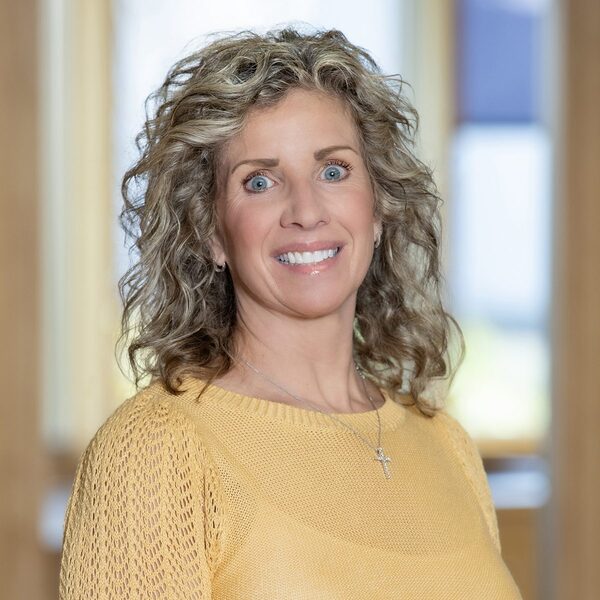
Tina Rosckes, Senior Vice President, Trust, CISP, CTFA
Tina joined the Trust Company in 1998. As a Trust Officer she administers a range of account relationships including trusts, estates, and IRAs, with over 20 years of experience in the financial services industry. Her expertise in special needs trusts and IRAs makes her a valuable asset to the trust team.
Originally from western North Dakota, Tina earned the Certified IRA Services Professional (CISP) designation from Cannon Financial Institute and has also achieved the Certified Trust and Financial Advisor (CTFA) designation. Before her years in the trust business she held positions in payroll and accounting. She resides in Glencoe with her husband, James, and three adult children.
Tina has been a mentor for confirmands at Christ Lutheran Church and serves on its Altar Guild and Audit Committees. She was a ten year member of the Glencoe Rotary Club, where she served as membership chair, and she currently serves on the Glencoe Regional Health Foundation Board.
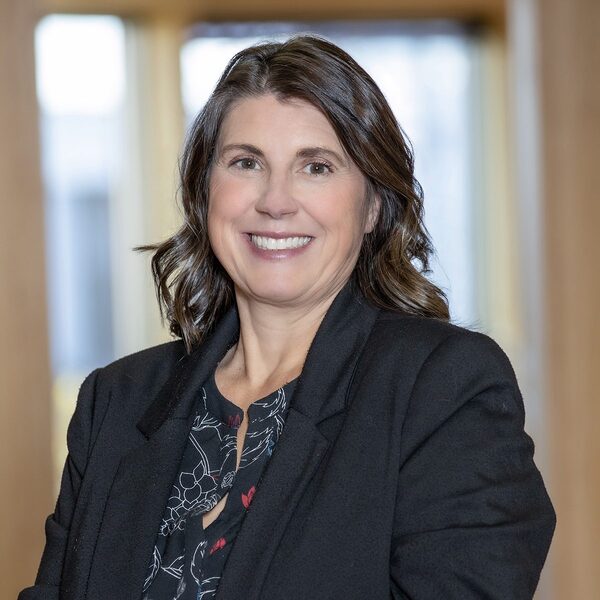
Robin Fink, Vice President, Trust Officer
Robin has been with Security Bank & Trust for 20 years and comes to the Trust Department with a wealth of experience in the financial services industry. Throughout her career she has worked with a diverse range of clients, including high net worth individuals, families, and businesses.
She has an in-depth understanding of financial planning with a strong background in investment management. She is a skilled communicator and listener, with a talent for building relationships based on trust, respect, and confidentiality, and she is committed to providing her clients with a high level of service.
Robin holds a Bachelor's degree in Business Administration from Mankato State University. She and her husband, Matt, have lived in Belle Plaine for 25 years. Outside of work she enjoys time with her family, traveling, and being a grandma.
Robin is an active member at St. John's Lutheran Church in Belle Plaine and volunteers with Dollars for Scholars, a nonprofit that provides local scholarships to graduating seniors from Belle Plaine.

Tyler Miller, Wealth Management Associate, Trust
Tyler started with Security Bank & Trust Co. in 2019 as a loan officer at the Chaska office and takes pride in his history of building and maintaining repeat business relationships. His expertise in active listening allows him to evaluate individual needs and provide tailored solutions, with privacy, trust, and mutual respect at the forefront.
His background as a loan officer gives him practical insight into what people actually need, and those needs are amplified when a job changes or it is time to retire. As the child of a small business owner, Tyler understands the value of hard work and the pressure of wearing every hat in a business, which makes him a good partner on the financial side.
Tyler believes in spending time improving the community. He signed the bank up for Adopt A Highway in Carver County and piloted the Toys for Tots program, which is still going strong.
Tyler holds a Bachelor's degree in Business Administration with an emphasis in Management from the University of Wisconsin, River Falls.

Markus Anderson, CFA, Vice President, Portfolio Manager, Trust
Markus joined Security Bank & Trust Co. as a Vice President and Portfolio Manager, bringing several years of experience in the investment industry. Most recently, he was with RBC Wealth Management, where he worked with multi-asset investment portfolios as part of a large-scale wealth management program. His work included implementing investment strategies, monitoring portfolio allocations and performance, and working with investment managers to keep portfolios aligned with target allocations and client-specific requirements.
Prior to RBC, Markus worked at Wells Fargo, where he served private banking clients and developed a strong interest in investment management. His experience across both firms provided him with a strong foundation in portfolio management and an understanding of the importance of aligning investment decisions with each client’s individual goals and circumstances.
Markus earned a bachelor's degree in financial management from the University of St. Thomas. He is a CFA charterholder with a passion for investing and portfolio management. He enjoys building relationships with clients and taking a thoughtful, long-term approach to helping them achieve their investment objectives.
Outside of work, Markus is active in his church in Plymouth and enjoys spending time with family and friends, fishing, and being outdoors.
"Tina Rosckes and Security Bank and Trust Co. have my full confidence. I selected them over 5 others interviewed and more considered as the successor trustee of the family trust. When I met Tina, I knew I had found a person and an organization that I could trust to ensure that my parent's wishes, the trust clarifications and the court orders would be followed. Tina and I continue to work together as needed for a smooth transition..."
Google Review
"I've worked with Marc Hoffmann in the Trust Department over many years and highly recommend him and his team."
Google Review
"It has been a great and absolutely positive experience for my family working with Tina Rosckes. She goes above and beyond consistent, solid professionalism with compassion, care, sensitivity, and very quick responsiveness. These qualities were paramount in choosing a partner to fit our family's complex needs. Thank you Tina!"
Google Review
"We met with Tina and had a very useful discussion on how to handle our somewhat complicated estate. She is very knowledgeable and took time to answer all of our questions. We will be using her as a trustee."
Google Review
Online access
Existing clients can reach their accounts directly.
To enroll in this option or contact us with questions, please email or call us at (320) 864-5134 or (651) 452-9550.
Questions people ask when they are choosing a trustee
These are the questions estate planning attorneys tell their clients to ask before naming any institution. We have answered them the way we would answer them on the phone.
What should you look for when comparing banks for a trust account?
Ask five things of anyone you are considering. Who specifically will administer the account, and can you speak with that person before you commit. What the annual fee covers, in particular whether tax preparation and investment management are included or billed separately. What happens when your trust officer retires or leaves. And whether they have administered the kind of assets you actually own, because farmland, a closely held business, or rental property is a different job than a portfolio of mutual funds. The five officers who would do the work here are named further up this page with their direct numbers.
What is the difference between a bank trust department and a trust company?
Functionally they do the same work, which is acting as a fiduciary under a trust document. A trust company is a standalone chartered institution. A bank trust department sits inside a bank, which means the trust officers and the bankers are in the same building and a family can keep its deposit relationship, its lending, and its trust administration in one place. Both are regulated as fiduciaries. The practical difference is usually access: who picks up the phone, and whether they know your family.
What does a corporate trustee cost?
Trustee compensation is an annual fee, disclosed in writing before you commit to anything. The useful comparison is not the headline percentage but what it includes. Ask any institution you are considering whether fiduciary tax preparation is inside the fee or billed on top, whether investment management is separate, whether there is a distribution fee, and how assets like real estate or a closely held business are charged. Ask us for the schedule and ask the same of everyone else on your list.
Who will be my point of contact, and what happens if that trust officer leaves?
You get a named officer, not a service center. The department is five officers who work the same book of accounts and know each other's files, so coverage during a vacation or a transition is another person who already knows the account rather than a stranger reading it cold. That continuity is a large part of what naming an institution buys you, and it is a fair question to ask anyone you are considering.
How is the trust invested, and can the family have a say?
The trust document controls. Where it gives the trustee investment discretion, we manage the portfolio against a written objective tied to what the money is for and the beneficiaries it has to serve, reviewed on a schedule rather than when markets get loud. Some documents instead give an investment committee, a named advisor, or a co-trustee that authority, and where they do, we administer to what the document says. If you are drafting now, this is worth deciding deliberately with your attorney rather than by default.
Who does a beneficiary talk to?
A named officer, not a queue and not a call center in another state. A beneficiary who calls with a question reaches someone who already knows the account. How much information a beneficiary is entitled to, and when, is set partly by the trust document and partly by Minnesota fiduciary law, and it is one of the things we walk through at the start so nobody is guessing.
Can you take over a trust that another institution is administering now?
Yes, and it is common. Changing trustees is governed by the trust document, which may allow the beneficiaries or a named trust protector to remove and replace a trustee, and in some cases it requires a court or the consent of the parties. Bring us the document and we can tell you what it permits. We also handle the transfer of the assets and the accounting handoff, which is the part people expect to be painful. For the full process, including what a successor reviews before accepting, read our post on changing trustees on a Minnesota trust.
What happens if beneficiaries disagree with a distribution decision?
Disagreement is one of the main reasons families name an institution rather than a relative. We apply the standard the trust document sets, we document the reasoning, and we explain it. Being outside the family is what lets us say no to a request without it becoming a Thanksgiving problem, and it means the answer rests on the document rather than on who is most persuasive.
What does a corporate trustee do?
A corporate trustee is a bank trust department that administers a trust under the terms of the trust document. That means holding the assets, keeping the records, managing or overseeing the investments, filing the trust's tax returns, deciding on distributions to beneficiaries under the standard the document sets, and being accountable to the beneficiaries for all of it.
When should you name a bank as trustee instead of a family member?
The common reasons are impartiality, continuity, and workload. If the person named as trustee is also a beneficiary, they judge their own distribution requests alongside a sibling's. An individual trustee's service ends with death, illness, or resignation, while an institution continues. And the administration itself is real work, including accountings and fiduciary tax filings, done during a period when a family member is often grieving.
Can a family member serve as co-trustee with the bank?
Yes. Co-trustee is one of the three capacities we serve in, and it is a common arrangement. The family member brings knowledge of the beneficiaries and the family's intent. We bring the administration, the records, the filings, and an outside voice when a distribution request is hard.
What happens if the person named as trustee cannot serve?
If the document names a successor trustee, that person or institution steps in. If it does not, or if the named successor also cannot serve, the trust may need a court to appoint one, which costs time and money. This is why naming a corporate successor trustee in the document is worth doing even when a family member is serving now. It costs nothing until it is needed.
What is the difference between a trustee and a personal representative?
A trustee administers a trust under the trust document. A personal representative administers an estate under a will and, where required, under the supervision of a probate court. Minnesota uses personal representative in place of the older term executor. The same institution can serve in both roles, and often does, because most families have both a trust and an estate.
Does a trust avoid probate in Minnesota?
Assets titled in the name of a trust generally pass under the trust document rather than through probate. Assets the person owned individually and never retitled do not, which is the most common reason a family with a trust still ends up in probate. Whether a probate is required in a particular estate is a question for your attorney, and we work with your attorney to open one when it is.
How long does estate settlement take?
It depends on what is in the estate and whether a probate and estate tax return are required. Marketable securities can be valued and distributed relatively quickly. Farmland, closely held business interests, rental property, and collectibles take longer because they have to be valued and, in many cases, sold or transferred on their own timeline. Setting the expectation early is part of the job.
Can my IRA be titled in the name of my trust?
No. An IRA is an individual retirement account. It can only be titled in the individual owner's name and stays that way during the owner's lifetime. What you can do is name your trust as the beneficiary of the IRA. The account stays in your name and passes on your death according to the beneficiary designation on file. This is the question our trust officers are asked more than any other on retirement accounts.
What happens to an IRA when the account owner dies?
An IRA passes to whoever is named on the beneficiary designation, not under the will. What the beneficiary must withdraw and by when depends on their relationship to the owner and on rules that changed materially for most non-spouse beneficiaries who inherited after 2019. A surviving spouse has options a child does not. Get this one right in advance, because the tax consequences of handling it wrong are difficult to undo afterward.
Should a trust be named as the beneficiary of an IRA?
Sometimes, and the answer turns on the trust's terms and the beneficiary's situation. A trust can protect a beneficiary who should not receive a large sum directly, and it can also change the distribution timetable in ways that raise the tax cost. This is a question to work through with your attorney and tax professional, and we are glad to be in that conversation.
Can you serve as trustee if another attorney drafted the trust?
Yes. We are regularly named in documents drafted by firms we have not worked with, and we are regularly asked to step in on trusts that someone else has administered for years. You do not need to change attorneys, and we do not draft documents ourselves.
Do you have to move all of my banking to serve as trustee?
No. Trust assets are held and administered separately from a personal checking or savings relationship, and a trust relationship does not require one. Many trust clients do bank with us, because it is convenient to have both in one place, but that is a choice rather than a condition.
Can you administer a trust for a family that has moved out of Minnesota?
Yes. Out of state administration is a normal part of the department's work. Families move, beneficiaries scatter, and the trust stays where it was created. What matters is the document and the governing law it names, not where the beneficiaries currently live.
Where can I get a medallion signature guarantee?
We provide medallion signature guarantees, which are required to transfer securities and are genuinely difficult to find. Call the trust department before you come in, so we can confirm what documentation to bring and that the right officer is available to sign.
Keep reading
- How to choose a trustee in Minnesota, and the questions to ask before you name anyone
- Setting up a trust in Minnesota, from the first conversation with your attorney through funding it
- Successor trustee duties in Minnesota, the first 90 days for a family member who has just been handed the job
- Our team, every banker at Security Bank & Trust Co.
- Why Security, what independent and locally owned actually means here
- Locations, all 21 branches with hours and direct numbers
Start with a conversation, not a decision
Whether you are writing a trust, holding a document that names someone who should not be serving, or sitting with an estate that started last week, the first step is the same. Call the trust department and talk it through. There is no obligation and no charge for the conversation.
Growing, together.
Products purchased through a trust relationship are not FDIC insured, are not bank guaranteed, may lose value, and involve investment risk, including possible loss of the principal amount invested. Past performance cannot guarantee future results. Our services do not constitute legal or tax advice; please consult your attorney or tax professional to determine how this information may apply to your own situation. Page last reviewed October 2026.