


Manufacturing Business Loans in Minnesota
Equipment, working capital, plant real estate and treasury management for manufacturers across McLeod County, Carver County, the Twin Cities metro and greater Minnesota.
A used press that has to be bought by Friday. An order that doubles your materials bill before the customer pays. A building next door that finally comes up for sale. Security Bank & Trust Co. finances Minnesota manufacturers through all of it, and the lender who reviews your file can stand on your floor.
Only need a machine? Start at business equipment financing. Buying the building? Start at commercial real estate loans. Buying a company? Start at business acquisition financing. For everything we lend on, see Minnesota business loans and lines of credit.
Why Minnesota manufacturers bank with Security
Manufacturing is hard to underwrite from a desk. Cash sits in raw materials, then in work in process, then in finished goods, then in a receivable, before it comes back. Equipment is expensive and the good deals have deadlines. A banker who mostly sees service businesses will undersize the line or ask for the wrong things.
That is why we bank manufacturers as partners, not transactions. Our lenders go to the plant and learn your cycle, your customers and your machines. The same team handles the loan, the operating account and the treasury tools, and your credit is decided in Minnesota by people you know by name. Manufacturers who bank with us describe that partnership in why small businesses are leaving big banks.
We bank manufacturers from Glencoe, Winsted and Brownton in McLeod County to Chaska, Waconia, Hamburg and Cologne in Carver County, north to Cambridge and Isanti, and across the west metro.
What we finance for manufacturers
Machinery and equipment
- CNC, presses, lathes and fabrication machines
- Production, packaging and processing lines
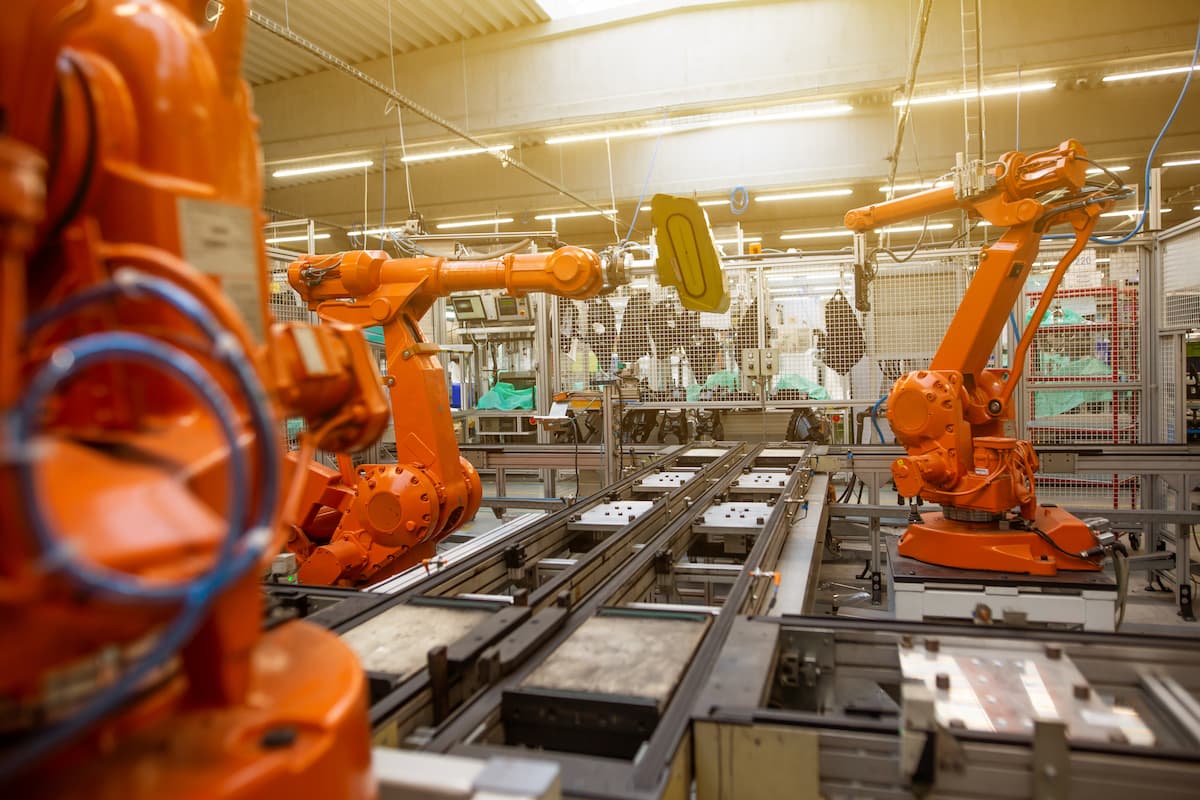
- Robotics, automation and conveyor systems
- Forklifts, trucks and shop equipment
- Refinancing equipment you already own
Working capital
- Revolving lines for materials, labor and receivables
- Borrowing base lines on receivables and inventory
- Term loans for a defined project
- Consolidating earlier equipment and working capital debt
Plant and facility real estate
- Buying the building you rent today
- Additions, expansions and new construction
- Refinancing a plant you already own
- SBA 504 for long term owner-occupied real estate
Acquisitions and succession
- Buying a manufacturing company
- Buying out a partner or a retiring owner
- Transitions to family or a management team
- SBA 7(a) where goodwill is part of the price
Equipment and machinery loans
A machine should be financed for about as long as it earns. A five axis mill, a press brake or a packaging line generally gets a term set to its useful life, with the equipment as collateral. Shop tools and software turn over faster and get shorter terms. Used equipment works the same way, sized to its age, condition and remaining life.
The deals that matter most often come with a deadline: an auction, a plant closing, a dealer who has another buyer. Call your lender when you start looking, not when the seller wants an answer. A lender who already knows your statements can move on a quote much faster than one meeting you for the first time.
The full list of what qualifies, and how terms are set, is on business equipment financing.
Working capital for the cash cycle
Every manufacturer carries the same gap. You pay for materials and labor long before your customer pays you. The length of that gap is your cash cycle, and it is what a working capital line should be sized against.
- Raw materialsYou buy steel, resin, lumber or ingredients ahead of the run.
- Work in processLabor and overhead go in while the order is on the floor.
- Finished goodsProduct waits to ship, or ships on terms.
- ReceivableYour customer pays in 30, 60 or 90 days, and the line pays down.
A line of credit carries the business across that cycle. You draw as you buy and build, and pay down as invoices are paid, with interest owed only on what is drawn. Many manufacturing lines carry a borrowing base, a periodic report of eligible receivables and inventory, so the limit grows when volume does instead of staying where it was set years ago.
Two structures cause most of the trouble we see. Financing a machine out of the line, which leaves the line full when the next big order arrives. And financing inventory on a long term loan, which leaves you paying in year four for material you sold in year one. For the mechanics, read how a business line of credit works in Minnesota.
Have a quote, an order or a building in front of you? The earliest conversation is the most useful one.
Talk With a Business LenderPlant expansion and owner-occupied real estate
A lot of growing manufacturers reach the same point: the lease is up, the space is full, and the building down the road is for sale. Owning the plant fixes your occupancy cost and builds equity in the business. We finance purchases of the building you operate in, additions and expansions, new construction, and refinancing of a plant you already own.
SBA 504 is often the right fit for a plant. The bank finances 50 percent, a Certified Development Company finances 40 percent on a long fixed term, and the business puts 10 percent down. Conventional owner-occupied financing works well too, especially when the business has equity to put in. If the project means building, see commercial construction loans for how draws and inspections work.
SBA and state programs for manufacturers
- SBA 7(a) covers equipment, working capital, acquisitions and refinancing, up to $5 million. The program also has versions your lender may raise, including the Export Working Capital Program for manufacturers selling overseas.
- SBA 504 is for fixed assets: the plant, an addition, or heavy equipment with a long life.
- The Minnesota Loan Guarantee Program is the state's own program, administered by the Minnesota Department of Employment and Economic Development. Security Bank & Trust Co. is an enrolled lender.
- State equipment and automation programs from the same department sometimes pair state funds with a bank loan. Availability changes, so ask your lender whether one is open and fits.
On any of these, your lender builds the file and presents the credit here, and works alongside the Certified Development Company on a 504. Eligibility and program terms are on SBA loans in Minnesota.
Buying, selling or passing on a manufacturing business
Many Minnesota manufacturers were started by an owner who is now thinking about what comes next. The buyer might be a competitor, a key employee, a son or daughter, or an outside buyer. Each needs a different structure, and each goes better when the lender is involved before the price is set.
We finance acquisitions of manufacturing companies, partner and owner buyouts, and management and family transitions. A buyer will want three years of the company's statements, the equipment list and its condition, customer concentration, and how long the seller will stay to hand off the relationships. The due diligence checklist for small business acquisitions covers most of it. Owners planning the other side of the deal should read exit planning for Minnesota business owners, and our trust and wealth management team can help plan what happens to the proceeds.
Treasury management for manufacturers
The loan gets the attention, and the operating account does the daily work. Manufacturers run heavy vendor payments, a weekly or biweekly payroll, and customer payments that arrive on their own schedule. Our manufacturing relationships bring the loan, the operating account and the treasury tools together with one team, so the people who know your business are the ones who answer when you call.
| Service | What it does for a manufacturer |
|---|---|
| Positive pay | Stops altered or counterfeit checks on a high volume vendor payment run. |
| ACH origination | Runs payroll and vendor payments on your production schedule instead of a stack of paper checks. |
| Remote deposit | Deposits customer checks from the office so the money is not in transit while payroll is due. |
| Wires | Equipment purchases, deposits on long lead orders and supplier payments that cannot wait. |
| Sweeps and zero balance accounts | Moves idle cash to where it is needed, so one account is not drawing on a line while another sits full. |
| User permissions | Lets your bookkeeper, controller and plant manager each see and approve only what their job requires. |
| Account analysis | Shows what the banking relationship costs, itemized, so you can see where the volume goes. |
The full toolkit is in the treasury management guide.
What your lender will review
Having these ready shortens the process more than anything else.
| Item | What we are looking at |
|---|---|
| Business financial statements and tax returns | Three years, plus a current interim statement. |
| Receivable and payable agings | Who owes you, who you owe, and how old each balance is. This sets a borrowing base. |
| Inventory detail | Raw materials, work in process and finished goods, and how you count them. |
| Equipment list or quote | Make, model, year and condition, or the dealer or auction quote for what you are buying. |
| Customer concentration | Your largest customers and their share of sales. A heavy concentration is common in manufacturing and worth discussing early. |
| Personal financial statements | Owners and guarantors, with personal tax returns. |
| Purchase agreement or plan | For a building, an acquisition or an expansion, what is being bought and on what terms. |
The business loan guide walks through each step from first conversation to closing.
How a manufacturing loan comes together
- Call when you start lookingAn early conversation about the machine, the order or the building is worth more than one after you have committed.
- Your lender visits the plantWe learn the equipment, the cycle and the customers, and size the request around them.
- Send the fileStatements, agings, the quote or purchase agreement, and personal financial statements.
- Structure and decisionConventional or SBA, term, collateral and covenants, presented and decided in Minnesota.
- Close and set up the accountsOperating account, line of credit, positive pay and ACH, built around how you pay and get paid.
Where we bank manufacturers
Our branches sit in 18 Minnesota communities: Glencoe, Winsted, Brownton and Plato in McLeod County; Waconia, Chaska, Cologne, Hamburg, Mayer and New Germany in Carver County; New Auburn in Sibley County; Minnetonka, Eden Prairie and Wayzata in Hennepin County; Cambridge and Isanti in Isanti County; Ramsey in Anoka County; and North Oaks in Ramsey County. Stop in at any branch and ask for a lender, or see our locations and hours. We also lend to manufacturers in communities without a branch, across the Twin Cities and greater Minnesota.
Start with the lender who leads your market
Brian Wagner leads the bank's lending, and a senior lending officer leads each of our three markets.




Ward Greeley
SVP, Senior Lending Officer, Twin Cities Metro
Leads our lending team across the Twin Cities metro.
Common questions about manufacturing business loans in Minnesota
Which Minnesota banks provide financing for manufacturers?
Look for a bank that will walk your floor, size a line of credit to your order book, finance new and used machinery, and decide the credit in Minnesota. Security Bank & Trust Co. finances manufacturers, fabricators, machine shops and food processors from 21 locations in 18 Minnesota communities, including Glencoe, Winsted, Chaska, Waconia, Hamburg, Cambridge and Eden Prairie. Your loan is presented and decided here by people who can meet you at your plant.
What types of business loans do manufacturers use?
Most manufacturers use three or four at once. An equipment loan matched to the useful life of each machine. A revolving line of credit for materials, labor and receivables between the order and the payment. A real estate loan for the plant or the building next door. And, when ownership changes, an acquisition or buyout loan. The mistake to avoid is making one loan do another's job, such as funding a machine out of the line or inventory out of long term debt.
Can a manufacturing company get an SBA loan?
Yes. SBA 7(a) is used for equipment, working capital, acquisitions and refinancing, up to $5 million. SBA 504 is built for fixed assets such as a plant or heavy equipment, with the bank financing 50 percent, a Certified Development Company financing 40 percent, and the business putting 10 percent down. Your lender builds the file and presents the credit here. SBA programs carry their own eligibility rules and terms.
What is the best way to finance a manufacturing expansion?
Split it by what the money buys. The building or addition goes on a real estate loan or SBA 504. New lines and machines go on equipment loans matched to their life. The added materials and labor that come with more volume go on a larger line of credit. Bring your lender the plan before you commit to the building or the equipment, because the sequence and the down payment are easier to set early.
How does a working capital line of credit work for a manufacturer?
You draw on the line to buy materials and run labor ahead of an order, and pay it down as your customers pay you. Many manufacturing lines carry a borrowing base, a periodic report of eligible receivables and inventory that keeps the available limit tied to the collateral actually there. That lets the line grow with your volume instead of staying at the number it was set at years ago.
Can I finance used manufacturing equipment?
Yes. We finance new and used machinery, and we refinance equipment you already own. For used equipment your lender looks at the age, condition and remaining useful life of the machine, and sets the term to match. If a seller needs an answer quickly, call your lender before the deal is due rather than after.
Can I get a manufacturing business loan with a low credit score?
Credit history is one factor among several. Your lender also looks at the cash flow of the business, the collateral, how long you have run the operation, and what the money is for. A low score does not end the conversation, and a high one does not settle it either. All loans are subject to credit approval. Talk with a lender early and bring three years of financial statements so the whole picture is on the table.
How can a manufacturer lower bank costs on high volume accounts?
Start with an account analysis statement, which itemizes what each service on the account costs. Then look at the volume behind it. Moving vendor payments and payroll from paper checks to ACH, depositing checks by remote deposit, and using sweeps between operating and holding accounts all change what the account handles each month. Your treasury contact can walk through the statement with you line by line.
How long does a manufacturing loan decision take?
Most standard requests get a decision two to three weeks after the file is complete. The timeline depends far more on how complete the information is than on the bank. A request that arrives with three years of statements, an interim statement, a receivable and payable aging, and the equipment quote or purchase agreement moves through underwriting with fewer delays.
Do you finance buying or selling a manufacturing business?
Yes. We finance acquisitions of manufacturing companies, buyouts of a retiring owner, and transitions to a family member or a management team, often with an SBA 7(a) structure when the purchase includes goodwill. Bring your lender in before the price is set, because the structure is easier to shape early.
Are there Minnesota state loan programs for manufacturers?
Yes. Security Bank & Trust Co. is an enrolled lender in the Minnesota Loan Guarantee Program, administered by the Minnesota Department of Employment and Economic Development. The department also runs programs that pair state funds with a bank loan for equipment and automation, and their availability changes. Your lender will tell you whether one is open and whether it fits your project.
Keep reading
Let us talk about your next machine, order or building
Whether it is one machine or a new plant, tell us what you are looking at. We will tell you plainly whether we can finance it and how we would structure it. That is another way we are
Growing, together.
All loans and lines of credit are subject to credit approval, and terms are determined at underwriting. SBA and state loan programs are subject to eligibility requirements and program terms set by the U.S. Small Business Administration and the State of Minnesota. Deposit and treasury management services are subject to account agreements and applicable fees. Page last reviewed October 2026.