

Owning a laundromat is not a flashy business. It is a machine-and-real-estate business that sells an errand nobody enjoys, and that is most of its appeal to the people who buy one. According to the Coin Laundry Association, there are about 29,500 coin laundries in the United States generating nearly $5 billion in gross revenue annually, and the industry is made up primarily of individual owner-operators rather than franchises.
That last detail is the one worth sitting with. This is an industry of individuals who bought one store, learned it, and in many cases bought another. It is a realistic thing to buy. Whether it is a good thing for you to buy comes down to three questions: what the specific store earns, what you pay for it, and whether the location will still be there in ten years.
This guide walks through what a laundromat costs, how the financing works, how these businesses actually make money, and the questions worth answering before you sign anything.
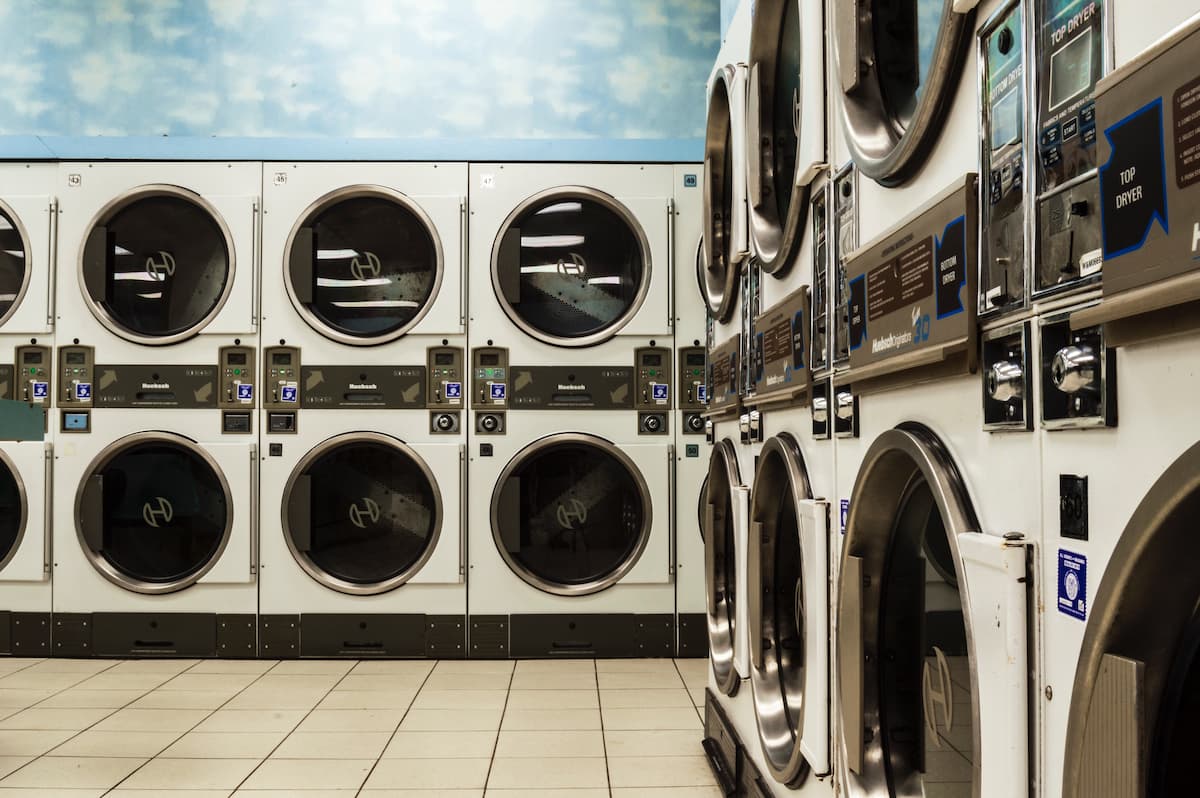
1. How much does it cost to open or buy a laundromat?
Buying an existing store and building a new one are different projects with different risk. Buying means you are paying for revenue that already exists and can be verified. Building means you are paying for revenue you believe will show up.
| Cost driver | Typical industry range |
|---|---|
| Buying an existing laundromat | $200,000 to $500,000 |
| Building a new laundromat | $250,000 to $1,000,000 and up |
| Commercial-grade machines | $1,000 to $3,000 each |
| Monthly utilities | $4,000 to $10,000 |
| Real estate | Varies widely by market and by whether you lease or buy |
These are broad industry ranges, not quotes. A specific store's numbers will land where they land, and the seller's actual utility bills and equipment age matter far more than any range.
What actually moves the number
Equipment age. A store with twenty-year-old machines is cheaper to buy and more expensive to own. Ask when each bank of washers was last replaced, and price the replacements you will be making in year two.
The utility setup. Water heating is the single largest operating cost in most stores. How the building heats water, and who pays for it under the lease, can swing profitability more than the purchase price does.
The lease. A laundromat is bolted to its building. Machines, plumbing, and venting do not move cheaply. A short remaining lease term with no renewal options is a serious problem, and it is the item first-time buyers most often skip.
How to finance a laundromat
Most buyers use some combination of their own cash, a bank loan, and a note from the seller. The financing paths worth knowing:
- SBA 7(a). The most common route for buying an existing store, because much of the purchase price is goodwill and business value rather than hard collateral.
- Equipment financing. For the washers, dryers, and payment systems, whether you are replacing a bank of machines or outfitting a new build.
- Commercial real estate financing. If the building is part of the purchase.
- A business line of credit. For the repair you did not plan for, which in this business arrives on a Saturday.
Security Bank & Trust Co. works with buyers on business acquisition loans, including through the SBA 7(a) and 504 programs. Whichever path fits, the work is the same: build the plan, verify the earnings, and confirm the return is one you would actually accept.
2. Location decides most of it
A laundromat serves a walk-in radius measured in minutes, not miles. The store cannot follow its customers, so the question is whether enough people who need it live close enough to use it.
What that looks like in practice:
- Housing without in-unit laundry. Older apartment stock, duplexes, and rental housing built before in-unit hookups were standard. This is the demand driver, and it is a question about the buildings, not about the people in them.
- Renter density. More renters in the walk-in radius means more households without their own machines.
- Near campuses. Students are reliable users, with the caveat that summer is quiet.
- Visible, easy parking, safe at night. A great deal of laundry gets done after work and on weekends. A store people do not want to sit in at 8pm loses to one they do.
- Co-tenants that hold people nearby. A grocery store or a coffee shop in the same center means a wash cycle is time spent, not time wasted.
How to analyze a market before buying
- Map the competition. Count every competing store inside a ten-minute drive and go look at each one. Their condition tells you what standard you have to meet.
- Check the housing stock. Census data on renter-occupied units and year built will tell you more about demand than any general demographic report.
- Sit in the store. Go on a Saturday morning and a Tuesday evening and count turns. Then compare what you counted against what the seller's numbers claim.
- Read the road. Check the city and county for planned construction, rezoning, and anything that changes traffic patterns or the housing mix nearby.
Lenders spend real time on location analysis too. If your read on the market is thorough, it makes the financing conversation shorter.
3. Where the money actually comes from
Machine revenue is the floor of the business, not the ceiling. Most of the margin improvement available to a new owner comes from what gets added around the machines.
Revenue beyond the machines
- Wash-dry-fold. The most common lever, and it converts a self-service business into a service business with a different margin.
- Pickup and delivery. Extends the store past its walk-in radius, which is the one way to escape the geography constraint.
- Commercial accounts. Salons, restaurants, gyms, and short-term rental operators produce steady weekday volume when the store is otherwise quiet.
- Vending and ATMs. Small, but close to free once installed.
Managing the cost side
- Water and gas efficiency. Higher-efficiency machines cut the largest line item on the operating statement. This is where the equipment replacement math usually pays for itself.
- Preventative maintenance. A machine out of service earns nothing and annoys a customer who may not come back.
- Cashless payment. Card and app payment reduces cash handling, and more importantly it produces real data about which machines earn what and when.
4. Loan options for a laundromat purchase
| Option | Usually the fit when |
|---|---|
| SBA 7(a) | You are buying an existing store and much of the price is business value rather than equipment. |
| SBA 504 | The building or major equipment is part of what you are buying. |
| Conventional business loan | The deal fits a standard credit structure without a guarantee. |
| Equipment financing | You are re-equipping a store you already own or plan to buy. |
| Line of credit | You need working capital for repairs and seasonal swings. |
A lender will size the loan against what the store earns, not against what the seller is asking, and those two numbers are not always close. Bring three years of tax returns and profit-and-loss statements plus the current year to date, and bring the actual utility bills. Our commercial loan application checklist covers what else to have ready.
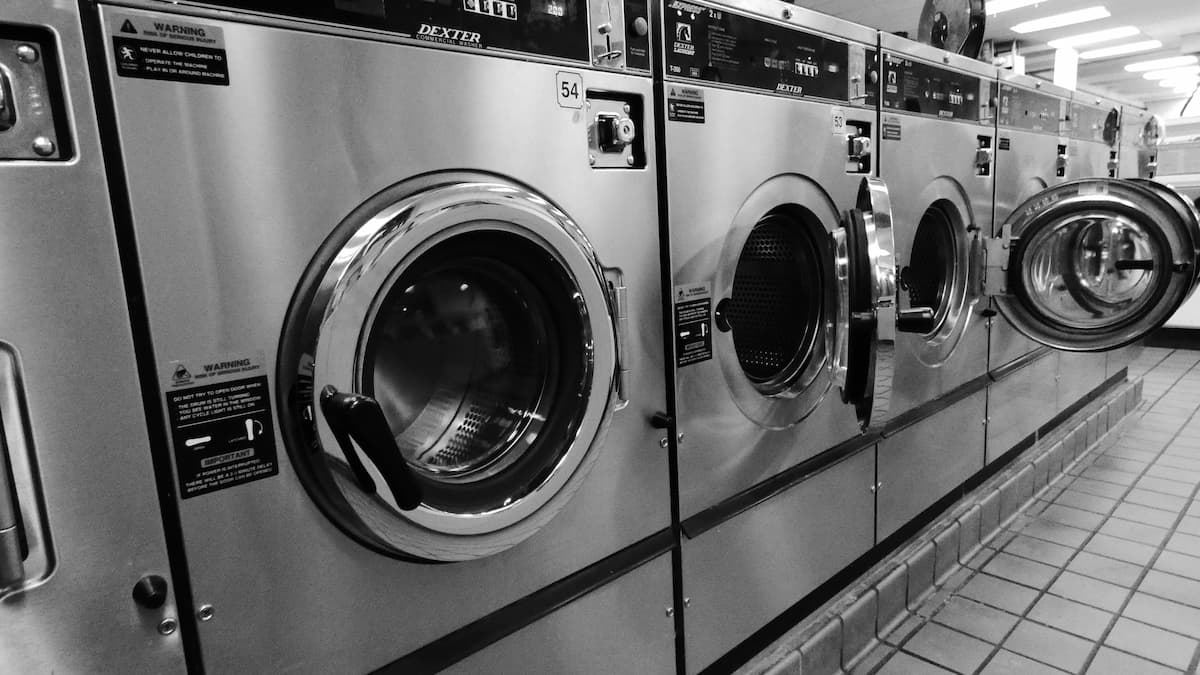
5. When to open a second location
The second store is where a laundromat stops being a job and starts being a portfolio. The signals that it is time:
- The first store runs without you. Not "mostly." If your presence is what keeps it working, a second one will break both.
- Cash flow is steady and boring. Predictable across at least a full year, including the slow season.
- You have found real demand, not just an available space. The temptation is to buy the store that is for sale rather than the store that should exist.
Systems that make a second store possible
- Remote monitoring. Cloud-connected machines and payment systems that let you see both stores from your phone.
- Self-service kiosks for wash-dry-fold intake.
- Machines that report their own faults before a customer has to tell you.
Is a laundromat a good investment?
It can be, and it is not the hands-off income stream it is often sold as. The honest version of both sides:
What works in its favor
- Demand is steady. People wash clothes in good times and bad. Demand is durable, which is not the same as guaranteed, and a store can still fail on a bad lease, a bad location, or deferred maintenance.
- Revenue is predictable once you understand the store's rhythm, which makes planning easier than in most small businesses.
- No inventory to buy, carry, or write off.
- It scales. A model that works in one location can often be repeated in another.
- Real collateral. The equipment is worth something, which affects how the purchase can be financed.
What works against it
- The upfront cost is real and it is concentrated in assets bolted to one address.
- It is not passive. Machines break, customers need help, and someone has to handle it. Owners who treat it as passive tend to be the ones who sell.
- Utilities are exposed. Water, gas, and electric are your biggest costs and you do not set those prices.
- Competition is local and immediate. A newer store opening four blocks away changes your business.
- Staff, once you add services. Wash-dry-fold and delivery mean employees, scheduling, and turnover.
Common questions about buying a laundromat
Are laundromats profitable?
Many are, and profitability varies enormously between stores in ways that averages hide. The variables that decide it are the same few every time: rent, utility costs, equipment age, and how many turns each machine gets per day. Two stores a mile apart can have very different margins. This is why an industry-level profitability figure is close to useless for evaluating a specific store, and why the seller's actual tax returns are the only number that matters.
How much do laundromats make?
Revenue depends on machine count, pricing, and turns per day, and net income depends on the cost side. Rather than reasoning from an industry average, work it from the store: count the machines, learn the vend prices, observe the turns across a weekday and a weekend, then compare your estimate against the seller's reported revenue. If the two disagree materially, that gap is the most important thing you will learn during diligence.
How much does it cost to start a laundromat?
Building from scratch generally runs higher than buying, because you are paying for buildout, plumbing, venting, and a full set of new machines before a single customer walks in. See the range table above. The larger difference is not cost, it is risk: a new store has no revenue history, so you are underwriting your own projections rather than verifying someone else's results.
How do you start a laundromat business?
In rough order: decide whether you are buying or building, define the trade area and confirm the demand is there, line up financing before you are under contract, secure the site and the lease, then equipment, permits, and utilities. Most first-timers find the lease and the utility infrastructure are the two items that decide whether the project works, and both are settled early. Talking to a lender before you sign a letter of intent generally shortens everything that follows.
Is owning a laundromat passive income?
No, and it is worth being direct about it because this business is marketed that way constantly. A well-run store with good equipment and cashless payment can be managed in limited hours per week, and that is genuinely attractive. It is not zero. Machines fail, plumbing backs up, and the person who owns the store is the person who gets the call. Owners who go in expecting nothing to do are the ones who end up selling in year two.
Do laundromats fail?
Yes. You will see a widely-repeated statistic claiming a very high five-year survival rate for laundromats. We are not going to repeat it, because we could not verify it against a primary source. What is defensible is narrower and more useful: the demand is durable, the assets have resale value, and the failures we see tend to trace to a specific cause rather than to the industry, most often a bad lease, an over-optimistic purchase price, or equipment that needed replacing sooner than the buyer planned.
How do you value a laundromat?
Small laundromats are usually priced on a multiple of net earnings, with the multiple moving on equipment age, remaining lease term, and how much of the revenue is verifiable. Cash-heavy stores with informal books tend to price lower for good reason: a buyer can only pay for revenue that can be proven, and a lender can only lend against it. If a seller is claiming income the returns do not show, treat that as a diligence finding.
Can you get a loan to buy a laundromat?
Yes. Laundromat purchases are financed regularly, most often through SBA 7(a) when the price includes significant business value beyond the equipment. What a lender needs to see is a store whose earnings cover the debt with margin, a buyer with capital at risk and a credible operating plan, and a lease with enough term left to outlast the loan. That last one gets overlooked and it stops deals.
Should I buy an existing laundromat or build a new one?
Buying is generally the lower-risk path for a first store, because the revenue exists and can be verified. Building makes more sense when you have identified real demand that no existing store serves, or when every store in the market is dated and you can be the good one. Buying also tends to be easier to finance, for the straightforward reason that a lender can read a history.
What should I check before I buy?
Three years of tax returns and profit-and-loss statements, twelve months of actual utility bills, the lease with all amendments and renewal options, the age and service history of every machine, the water heater's condition and capacity, and your own observed turn counts on at least two different days. Our due diligence checklist for small business acquisitions covers the process end to end.
Buying a laundromat in Minnesota
If the store you are looking at is in Minnesota, we would like to see the numbers. Security Bank & Trust Co. has been lending here since 1935, we have 21 locations across 18 communities, and acquisition loans are underwritten here by people you can sit down with.
That matters more on a laundromat than it sounds like it should, because the questions that decide these deals are local: whether that apartment complex is being renovated or torn down, whether the anchor tenant in the center is renewing, whether the stretch of road out front is scheduled to be rebuilt. Those are not questions a national lender working from a spreadsheet knows to ask.
Talk with a business lender, or find the location nearest you.
Keep reading
- Your due diligence checklist for small business acquisitions
- What business sellers are looking for in a buyer
- Buying a self-storage or warehouse facility
- Writing a better letter of intent
- How to get a business loan in Minnesota
This article is general information, not financial, investment, tax or legal advice. Industry figures cited are from the Coin Laundry Association as published on its site. Cost ranges are broad industry estimates and are not quotes. All loans are subject to credit approval, and SBA loan programs are subject to SBA eligibility requirements and program rules. Information current as of July 2026.