

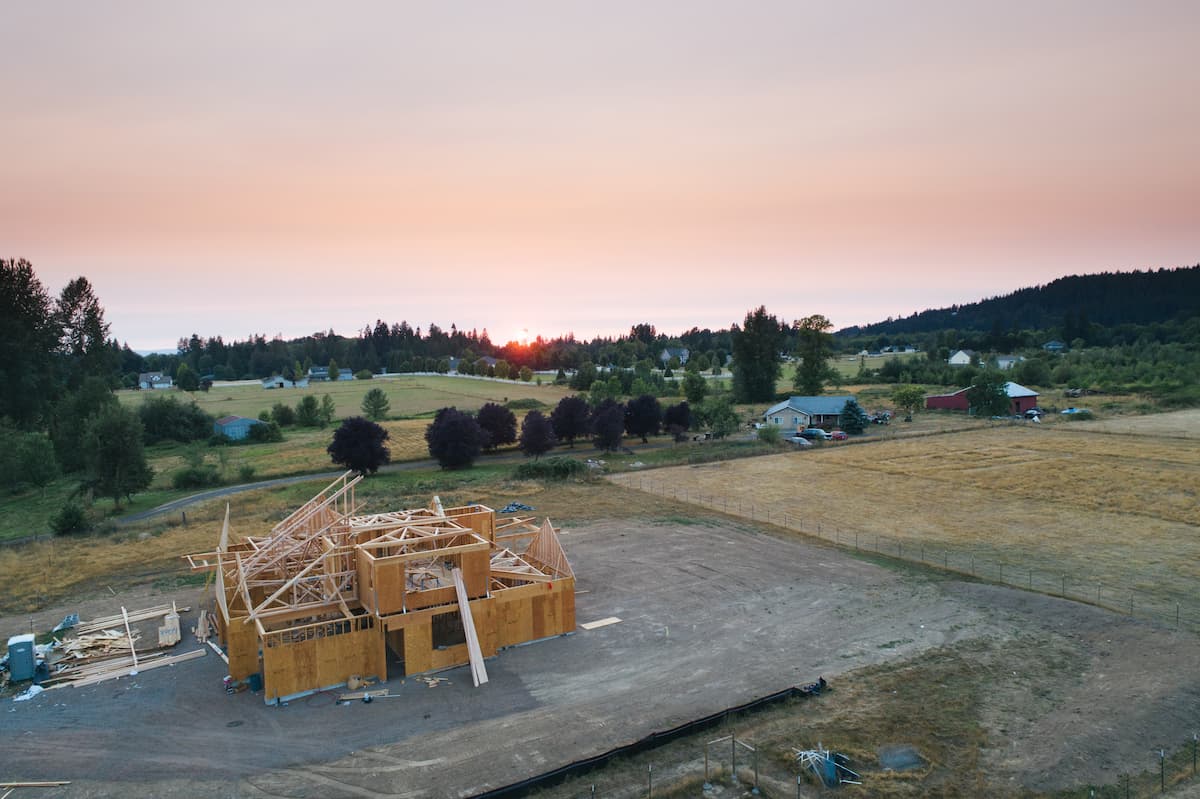
 Inventory is thin in a lot of Minnesota markets, and more people are looking at building than at buying. If that is where you are, the financing works differently than a mortgage does, and it is worth understanding before you sit down with a builder.
Here is what a construction loan is, what a lender will ask you for, what it costs beyond the rate, and what happens to the loan when the house is finished.
What is a construction loan and how does it work?
A construction loan is short-term financing that pays for a home while it is being built, then converts to or is replaced by a permanent mortgage when the house is done.
It is not a mortgage and it does not behave like one. A mortgage funds once, at closing, against a house that already exists. A construction loan is a non-revolving line of credit with a fixed amount available. Money comes out in stages, called draws, as work is completed and inspected. You are charged interest only on what has actually been drawn, not on the full amount.
Non-revolving matters. Unlike a home equity line or a credit card, what you pay down does not become available again. Once the line is drawn and the build is complete, the construction phase is over.
During construction, your payment is interest only. There is no principal payment until the loan converts to permanent financing.
What does a lender look at on a construction loan?
Your cash in the project, your income and assets, your plans, and your builder.
The cash question comes first. A lender will want to know how much you are putting in, including equity in a lot you already own. A lot purchased earlier at a good price is real equity and it counts. Expect to bring meaningful cash to a build; 10% to 20% of project cost is a common range, and the specific number depends on the project and your overall financial picture.
Your builder gets underwritten alongside you. A lender is committing to a house that does not exist yet, so the builder's track record on this type of home, their ability to hold a schedule, and their ability to hold a budget all matter. If you have not chosen one yet, Housing First Minnesota maintains a member directory, and referrals from your agent or from people who have recently built are worth more than online reviews.
What do you need before you apply?
Five things, and having them ready is the difference between a smooth process and a stalled one.
- A personal balance sheet with statements. Assets, liabilities, and verification of the cash available for the project.
- Income verification. W-2s, tax returns, and recent pay stubs.
- A site. Purchased outright or under contract.
- Final plans. Completed house plans and design, not concepts.
- A signed builder contract. With a builder you have already vetted.
You will also be asked about your plan for after construction, because that plan shapes how the loan is structured from the start.
What does a construction loan cost beyond the rate?
Interest during the build, draw administration, and the standard closing costs on any real estate loan.
Construction rates generally run above permanent mortgage rates. That is a function of the risk and the active monitoring a build requires, not a matter of shopping harder. Rates may be fixed or variable depending on the lender and the structure.
There are also costs to administer the draws. Each draw means an inspection of completed work and payment out to the contractor and subcontractors. That monitoring is not busywork. It is what keeps a subcontractor from going unpaid and filing a mechanic's lien against your property, which is the single most common way a build turns into a legal problem.
Standard closing costs still apply: appraisal, title work, recording. Disbursements run through a title company, which is also where title insurance comes into the picture.
How long is a construction loan?
Six to eighteen months, set by the complexity of the build rather than by its price.
A straightforward single-family build usually lands near twelve months. A larger or more complex custom home, or one on a difficult site, runs longer. Winter schedules in Minnesota affect this more than most people expect when they start planning in the spring.
Loan size is a poor predictor here. A complicated build on a hillside lot can take longer than a larger but conventional home on a flat one.
What is a jumbo construction loan?
A construction loan for a project that will exceed the conforming loan limit when it converts to permanent financing.
For 2026, the baseline conforming loan limit for a one-unit property is $832,750, per the Federal Housing Finance Agency. Above that, the permanent loan is a jumbo, and the construction financing behind it is usually structured differently: more equity, closer review of the plans and the builder, and a clearer picture of the permanent financing before the first draw.
Jumbo construction is an area we work in regularly, and it is one of the reasons builders in the metro send clients our way.
What happens to the loan when the house is finished?
It converts. Either into a permanent mortgage sold into the secondary market, or into a portfolio mortgage held by the bank.
This is the part worth deciding early rather than late. A lender who can handle both the construction phase and the permanent financing can structure the two together, which usually means fewer duplicated closing costs and no scramble to find permanent financing while a completion deadline is approaching.
We hold loans in our own portfolio, which gives us room to structure around a situation that does not fit a standard secondary market box. Self-employment income, a lot bought years ago, an unusual property, a timeline that does not fit a template. Those are conversations, not automatic declines.
What if you are remodeling rather than building?
Different loan, similar mechanics.
A renovation loan folds the cost of the work into the financing and draws against completed stages the same way a construction loan does. If you are buying a house that needs work before you would want to live in it, that is usually the right product rather than a purchase mortgage plus a separate project loan.
Our construction and remodeling loans cover the range: lot acquisition, new construction, acquisition and teardown, remodeling, and bridge loans for the gap between selling one house and finishing the next.
Frequently asked questions
How does a construction loan work?
A construction loan is a non-revolving line of credit that funds a home as it is built. Money is released in draws as work is completed and inspected, and interest is charged only on the amount drawn. Payments are interest only during construction. When the house is finished, the loan converts to or is replaced by a permanent mortgage.
What do you need to qualify for a construction loan?
A personal balance sheet with account statements, income verification through W-2s and tax returns, a home site that is purchased or under contract, completed house plans, and a signed contract with a builder you have vetted. Lenders also review the builder's experience with the type of home you are building.
How much money do you need down for a construction loan?
Commonly 10% to 20% of the project cost, though the specific requirement depends on the project, the property, and your overall financial picture. Equity in a lot you already own generally counts toward that contribution.
Are construction loan rates higher than mortgage rates?
Generally yes. Construction financing carries more risk and more active monitoring than a mortgage on a completed home, and pricing reflects that. Rates may be fixed or variable depending on the lender and how the loan is structured.
How long does a construction loan last?
Six to eighteen months in most cases. A conventional single-family build typically runs near twelve months. Complexity, site conditions, and Minnesota winter schedules matter more than loan size in setting the term.
What is a jumbo construction loan?
A construction loan on a project whose permanent financing will exceed the conforming loan limit, which is $832,750 for a one-unit property in 2026 per the Federal Housing Finance Agency. Jumbo construction loans typically require more equity and closer review of the plans and the builder.
Can you use a construction loan to remodel?
Yes. A renovation construction loan works the same way, drawing against completed stages of the work. It is generally the better structure than a purchase mortgage plus a separate project loan when a house needs significant work before move-in.
Building in Minnesota
If you are building in the Twin Cities metro or elsewhere in Minnesota, our guide to building in the Twin Cities covers the local side: permitting, winter schedules, working with Housing First Minnesota builders, and the lenders on our team who do this work.
If you are earlier than that and still weighing building against buying, start with how to buy a house, or read the tradeoffs on buying new construction from a builder instead of building custom.
Talk it through before you sign with a builder
The financing conversation is easier before the plans are final than after. We would rather help you structure the build than fix a structure that is already committed.
Talk with a lender, or read the full mortgage and home equity guide for how construction financing fits alongside our other home lending.
Security Bank & Trust Co. NMLS #415819. Member FDIC. Equal Housing Lender.