



Commercial Real Estate Loans in Minnesota
For businesses buying their own building and investors financing rental property, apartments and commercial real estate across Minnesota.
Loans for Minnesota businesses and investors who own commercial property. Owner-occupied buildings, retail and industrial, rental houses, apartments and student housing. We have lent against Minnesota real estate since 1935, and the person who reads your deal works here.
Buying a home to live in? This page covers commercial and investment property. For a house you will occupy, see mortgage and home equity loans. Building from the ground up? See commercial construction loans. Want the underwriting explained end to end before you talk to anyone? Read our guide to financing investment real estate.
What we lend against
Commercial real estate covers a lot of ground, and the underwriting changes with the property type. A building your business will occupy is judged on your operating cash flow. A building you will lease out is judged on the rent it produces. We lend against all four of the categories below, and most of our borrowers eventually own property in more than one.
The building your business operates in
- Purchase of the building you are currently renting
- Refinance of a building you already own
- Expansion, relocation or a second location
- Industrial, manufacturing, retail, office and showroom
We have helped a lot of former renters become owners. Rent is an expense that never comes back; a mortgage payment builds an asset on your balance sheet. SBA 504 financing is available on qualifying owner-occupied property and can reduce the down payment considerably.
Retail, office and industrial
- Downtown Minneapolis and St. Paul office buildings
- Retail centers and single-tenant net lease
- Industrial and warehouse, including owner-user sale leasebacks
- Rural manufacturing facilities across Greater Minnesota
Underwritten on the rent roll, the lease terms and the strength of the tenants, alongside your own financial position. Commercial property comes in many shapes, so we work quickly and creatively to hit the return you are underwriting to.
One to four family rental property
- Acquisition of single family and small multi-unit rentals
- Remodel and value-add on properties you already hold
- Refinance out of higher-cost or maturing debt
- Portfolio loans across several properties
We have financed over 300 one to four family rental properties and we hold them here. That matters if you have hit the cap on conventional secondary-market mortgages, or if you hold your properties inside an LLC rather than personally. Both are routine for us.
Apartments and student housing
- Apartment buildings in Minneapolis, St. Paul and the suburbs
- Greater Minnesota apartment properties
- Student housing near the University of Minnesota and the University of St. Thomas
- Acquisition, refinance and repositioning
We know the Twin Cities apartment market and we understand student housing, including by-the-bedroom leasing and the academic-year cycle that goes with it. Timing matters in multifamily, and a lender who can close is worth more than a lender who quotes.
Have a property under contract with a closing date? Bring us the address, the rent roll and the purchase agreement. We will tell you quickly whether it works.
Start the ConversationHow our commercial real estate loans are structured
Terms are set property by property. The table below is the range we work within, and the same structure applies whether the property is a strip center or a fourplex. What moves a specific deal inside these ranges is the property type, the strength of the market it sits in, its physical condition, and the financial strength of the guarantors behind it.
| Term | Commercial and owner-occupied | Residential rental and multifamily |
|---|---|---|
| Loan to value | Set by market strength, property type, property condition and guarantor financial strength. Stronger sponsors and stabilized properties support higher advance rates. | |
| Amortization | Up to 25 years, dependent on loan to value. | |
| Rate options | Variable rate, or fixed for three, five or seven years with an adjustable rate thereafter. | Variable rate, or fixed for three, five, seven or fifteen years with an adjustable rate thereafter. |
| Maturity | Up to 25 years, dependent on amortization. | |
| Government guaranteed | SBA 504 available on qualifying owner-occupied property. | Not applicable. SBA programs require owner occupancy. |
| Recourse | Personal guarantees are typical. Structure is discussed at term sheet, not assumed. | |
Rates and fees are quoted for a specific property after review. We do not publish a rate sheet for commercial real estate because the number depends on the deal, and a number quoted without seeing the property is not worth much to either of us.
How we underwrite income property
Two numbers drive most investment property decisions. Knowing them before you call gives you a realistic answer faster.
Debt service coverage ratio
Net operating income divided by annual debt service. Net operating income is your rental revenue less operating expenses, before the mortgage payment. If a property produces $120,000 of net operating income and the annual loan payment is $100,000, coverage is 1.20. Lenders look for a cushion above 1.00 so the property services its own debt with room for vacancy and repairs. Coverage, not the purchase price, is usually what sets the maximum loan.
Loan to value
The loan amount divided by the appraised value, which on a purchase is generally the lower of appraised value or purchase price. Advance rates run higher on stabilized multi-tenant property and lower on special-purpose buildings, vacant property and anything that needs a business plan to reach stabilization.
Beyond those two, we look at the rent roll and lease expirations, the operating history, your track record with similar property, your global cash flow across everything you own, and the physical condition of the asset. On a value-add deal we underwrite to the plan as well as to the current numbers, which is a conversation rather than a formula.
What the process looks like
- A conversation, not an applicationThe first call is about the property and what you are trying to do. Bring the address, the purchase price or current basis, and the rent roll if it is leased. We will tell you honestly whether it is a fit before you spend time on paperwork.
- Financial packagePersonal financial statement, two to three years of tax returns for you and any entity, the rent roll, operating statements on the property, and the purchase agreement if you are buying. Your lender will tell you exactly what is needed for your situation.
- Term sheetA written, non-binding outline of amount, rate structure, amortization, term, guarantees and conditions. This is the document you use to negotiate with a seller or compare against another lender.
- Appraisal and due diligenceThird-party appraisal, environmental review where the property or its history calls for it, title work and insurance review. Timelines depend on the appraiser and the property type, and your lender will give you a realistic window rather than an optimistic one.
- Credit approval, hereYour loan goes to a committee in Minnesota, made up of people who know these markets and, in many cases, the property. Nothing is sent out of state for a decision.
- Closing, and then a relationshipAfter closing you keep the same lender. When the next property comes up, you are calling someone who already knows your portfolio, which is most of the reason our borrowers come back.
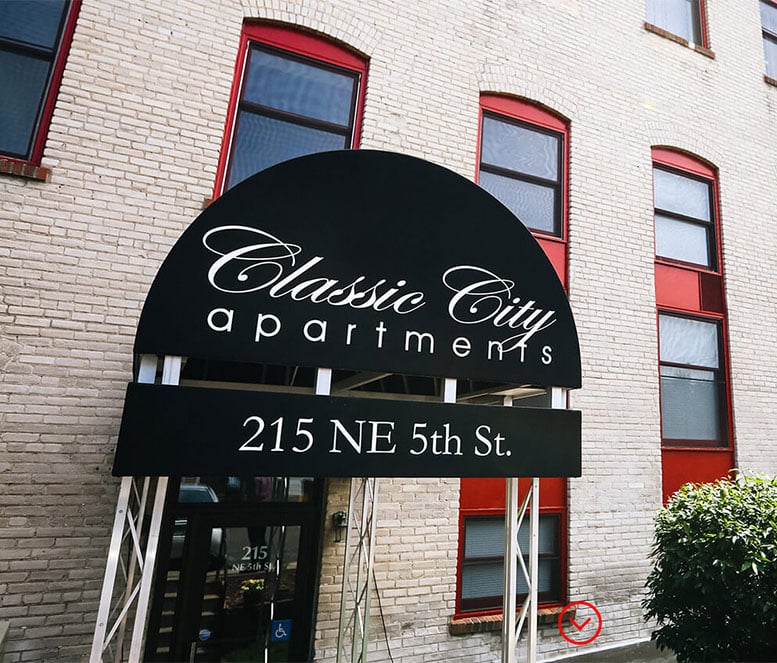
"I like the small bank feel where they actually know you. Yet they are capable of lending like a big bank."
Bryan Spille, Classic City ApartmentsWhy investors bank with us
We are a Minnesota community bank, not a national lender with a Minnesota office and not a broker placing your loan somewhere else. That has practical consequences for a real estate borrower.
Loans are held in our own portfolio, so we set the terms rather than fitting your deal into someone else's box. Decisions are made locally by people who can drive to your property. You keep one lender across your whole portfolio rather than starting over on every transaction. And because we also run a Trust and Wealth Management department and a full business banking operation, the deposit accounts, treasury services and eventual estate planning around your holdings sit in the same place as the debt.
What we are not is an investment bank. We do not place capital markets debt, syndicate deals or advise on mergers. We lend our own money against Minnesota property, which is a narrower business and the one we have been in since 1935.
"A complete willingness to help with our projects."
Dan Robbins, Jerry's Service, Inc.Commercial real estate loan FAQ
Which Minnesota banks lend to real estate investors?
Security Bank & Trust Co. has lent against Minnesota real estate since 1935 and holds over 300 one to four family rental properties in its own portfolio, alongside commercial, retail, industrial and multifamily loans. We are a locally owned community bank with 21 locations across the Twin Cities metro and Greater Minnesota, and every credit decision is made here. Investors typically compare community banks against national lenders and mortgage brokers; the practical difference is that a portfolio lender can set terms to fit the property, and can keep lending to you after the fourth or tenth property.
Do you finance investment property in Minneapolis and St. Paul?
Yes. We finance apartment buildings, retail, office and industrial property throughout the Minneapolis and St. Paul metro area, including downtown office buildings and student housing near the University of Minnesota and the University of St. Thomas. We also lend across Greater Minnesota, where our branch network is concentrated. Because our lenders are local, they can visit the property rather than underwrite it from a spreadsheet.
How many rental properties can I finance with you?
There is no fixed property count. Conventional secondary-market mortgages typically cap an individual investor at a set number of financed properties, and that ceiling is the point at which many investors first call a portfolio lender. Because we hold these loans ourselves rather than selling them, that cap does not apply. What governs how much we lend is your global cash flow, the performance of the properties you already own, and your overall leverage.
Can I borrow through an LLC instead of personally?
Yes, and most of our investor borrowers do. Holding property in a limited liability company or other entity is routine and we lend to entities regularly. Expect to sign a personal guarantee behind the entity, and expect us to underwrite both the entity and you individually. Bring the operating agreement and entity documents to the first meeting to save a round trip.
What is the difference between an owner-occupied and an investment property loan?
Owner-occupied means your business will operate out of the building. Those loans are underwritten primarily on your business's operating cash flow, with the real estate as collateral, and they may qualify for SBA 504 financing. Investment property is leased to tenants, so the loan is underwritten on the income the property produces, principally debt service coverage. The distinction affects advance rate, term options and which programs are available, so it is one of the first questions your lender will ask.
What debt service coverage ratio do you look for?
Coverage requirements vary by property type and market, and we do not publish a single threshold because a stabilized multi-tenant apartment building and a special-purpose single-tenant building are not the same risk. Lenders generally look for net operating income to exceed annual debt service with a margin for vacancy and capital repairs. In practice, coverage rather than purchase price is often what determines the maximum loan on an income property, so it is worth calculating before you make an offer.
How much can I borrow against a commercial property?
Loan to value is set by market strength, property type, property condition and the financial strength of the guarantors. Stabilized, multi-tenant property in a strong market supports a higher advance rate than a vacant or special-purpose building. Amortization runs up to 25 years depending on loan to value, with maturities up to 25 years depending on amortization. Your lender can give you a working range on a first call and a specific number in a term sheet after review.
Do you finance apartment buildings and student housing?
Yes. We finance apartment properties across the Twin Cities and Greater Minnesota, including acquisition, refinance and repositioning, and we understand student housing specifically, including by-the-bedroom leasing near the University of Minnesota and the University of St. Thomas. Student housing has its own occupancy cycle and turnover pattern, and underwriting that assumes a conventional apartment lease-up will get the property wrong.
Can I use an SBA loan for investment real estate?
No. SBA 504 and 7(a) both require that your business occupy the property, so they do not apply to property held purely for rental income. SBA 504 is an excellent fit for a business buying its own building, because it typically requires a lower down payment than conventional financing and fixes the rate on a portion of the debt for a long term. See our SBA loans page for how the programs work.
What documents do I need to apply?
For a purchase: the purchase agreement, the rent roll and current leases, two to three years of operating statements on the property, two to three years of personal and entity tax returns, a current personal financial statement, and entity documents if you are borrowing through an LLC. For a refinance, the same package without the purchase agreement, plus your current loan documents. Your lender will confirm the list for your specific situation before you start gathering.
How long does a commercial real estate loan take to close?
The variable is almost always the third-party work rather than the credit decision. A straightforward purchase with a current appraisal and clean title moves quickly. Appraisal turnaround, environmental review where the property history calls for it, and survey or title issues are what extend a timeline. Because our credit decisions are made in Minnesota, we can usually tell you where the deal stands the same week you ask, and your lender will give you a realistic date rather than the best possible one.
Do you finance a property that needs work before it produces income?
Yes. Acquisition, remodel and value-add lending is a regular part of what we do, on both commercial property and one to four family rentals. On a value-add deal we underwrite to your business plan as well as to the property's current numbers, so bring the scope of work, the budget and your contractor. If you are building from the ground up rather than renovating, that is a commercial construction loan instead.
Keep reading
- Guide to investment real estate financing, the underwriting explained end to end
- Business financing at Security Bank, the full range of commercial lending
- SBA loans, for a business buying the building it occupies
- Commercial construction loans, for building rather than buying
- Business loan guide, comparing loan types and structures
- Commercial real estate underwriting, what a lender actually reviews
Let's talk about the property
Bring us an address and a rent roll. We will give you a straight answer on whether it works and what it would take, before you spend money on an appraisal. That conversation costs nothing and it is how nearly every loan we make starts.
Growing, together.
All loans are subject to credit approval. Terms, structures and ratios described on this page are general and illustrative, vary by property and borrower, and are set out for a specific transaction only in a term sheet issued after review. A non-binding term sheet is not a commitment to lend. Page last reviewed July 2026.